U.S.-BASED MEDICAL APPAREL MANUFACTURING

Custom Wholesale Scrub Socks — Compression That Still Works at Hour Twelve

Scrub socks are the one garment in a clinician’s kit that gets replaced three times a year and bought in multiples. We manufacture custom compression socks and cushioned crew knits for U.S. scrub brands, uniform distributors and health systems: knitted to a stated pressure profile, graded to real calf measurements, and wash-tested so the compression is still there on the hundredth shift.

Why Scrub Socks Belong in Your Line

Socks are the highest-frequency repeat purchase in medical apparel. Compression loses elastic recovery within three to six months of regular wear, so the same customer reorders two to four times a year against a scrub top they replace once. The demand is already there: in one study of nursing students, 97% reported lower-limb pain and 87% reported swelling after clinical shifts. Your customers are buying socks every quarter. The only question is whether they buy yours at the same checkout as your underscrubs and scrub sets, or somebody else’s.

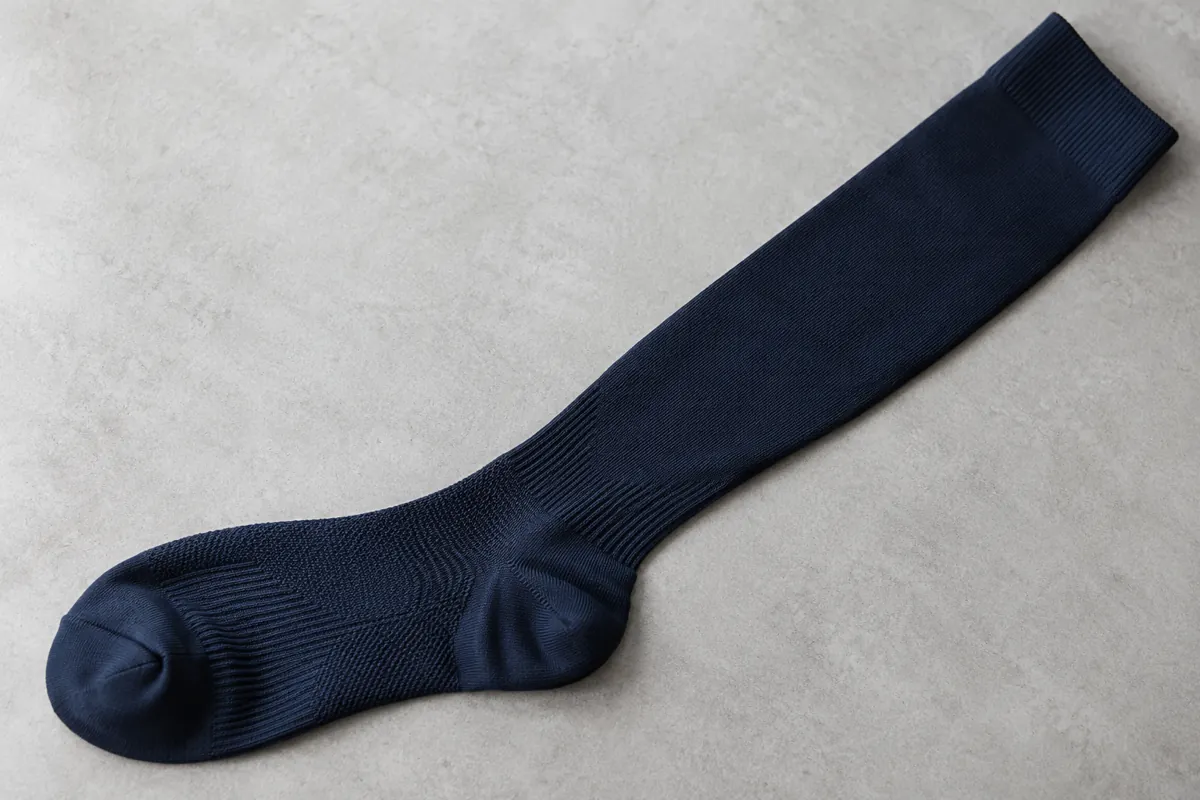
Navy knee-high scrub sock showing ankle and calf knit construction

Pressure you can name

Knitted to a stated mmHg at the ankle and at the calf, verified against a sealed sample. Not a range printed on a polybag after the fact.

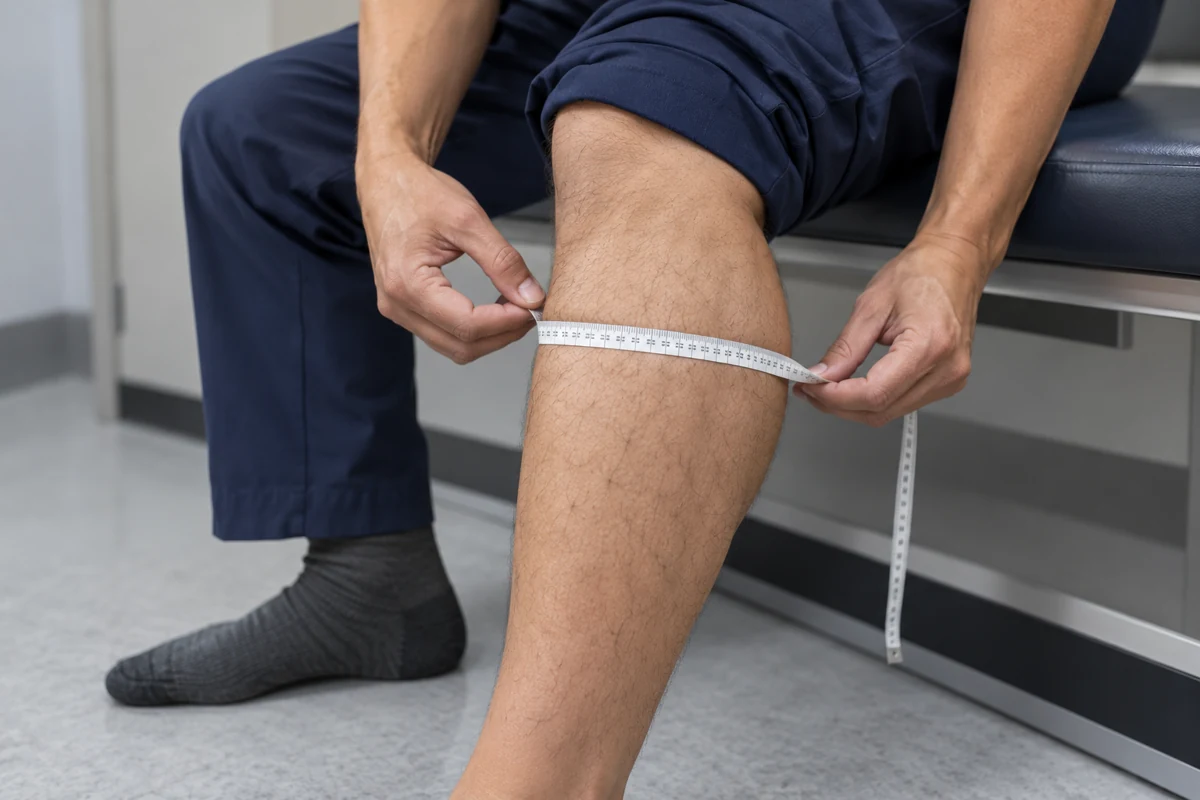
Calf circumference being measured for scrub sock sizing

Graded to calves, not shoe size

Calf-circumference bands with wide and extra-wide blocks. Fit is what decides whether the compression on the label reaches the leg at all.
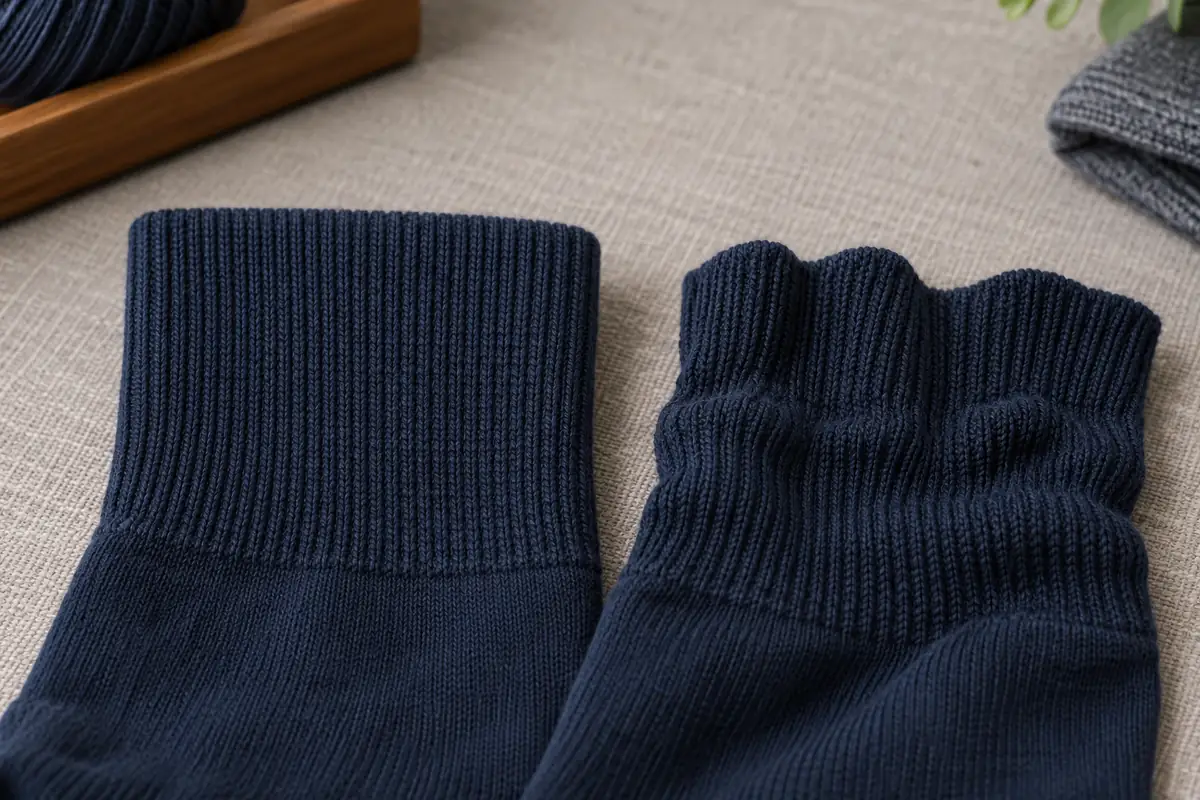
Deep ribbed cuff on a navy knee-high scrub sock

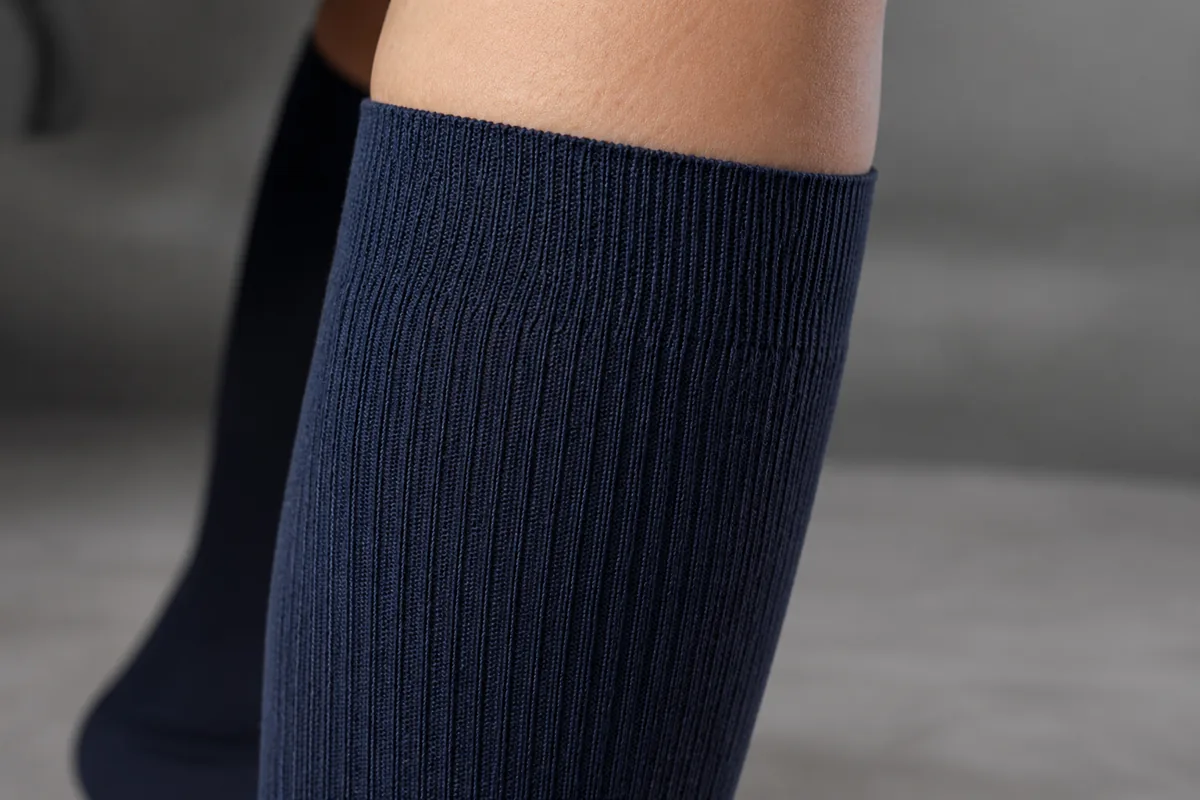
A cuff that holds without cutting

A deep non-roll welt with its own elastane specification, so the top band grips the leg instead of biting a ring into it.
Close-up of a flat linked toe seam on a scrub sock

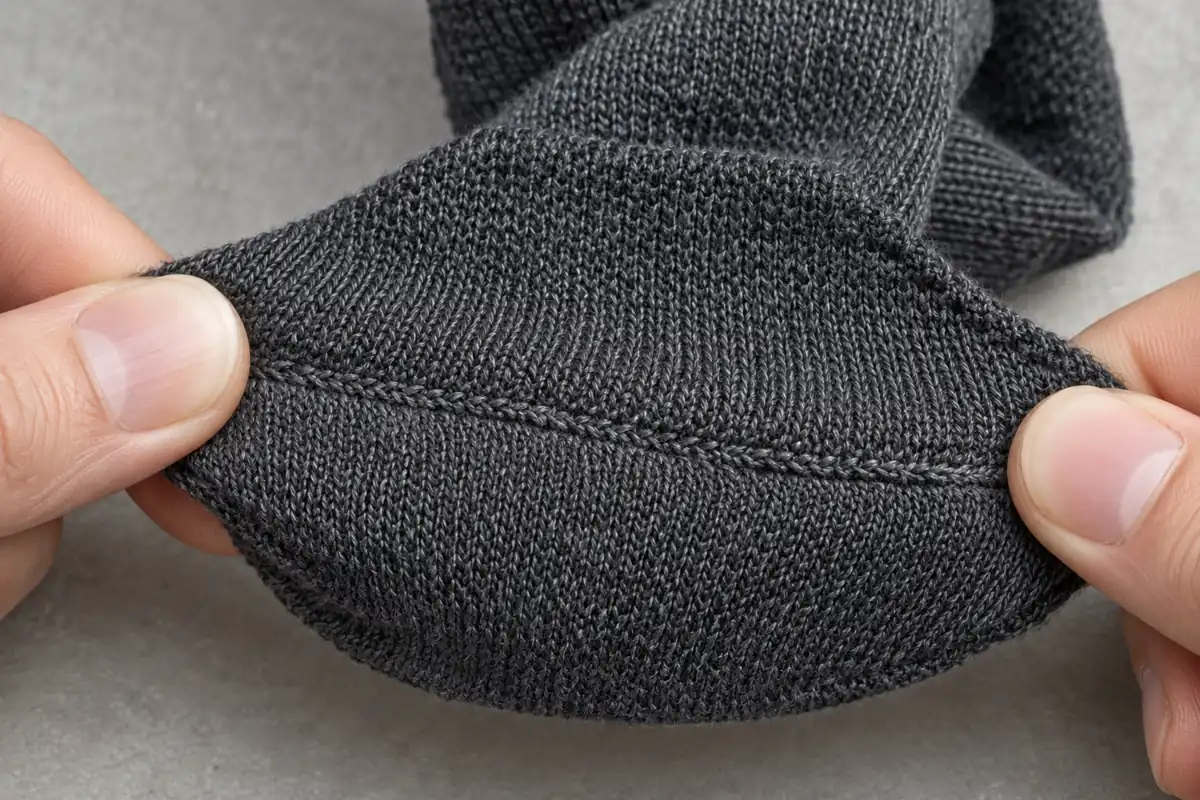
A toe seam nobody feels

Hand-linked flat closure, Y-heel shaping and reinforced heel and toe, which is where socks in closed clogs fail first.
Choosing a Pressure Class: What the Evidence Supports

Most catalogue socks are sold on a number, and the number is usually 20–30 mmHg because it sounds serious. The occupational research is less dramatic. Measuring 58 working adults across three consecutive days, both 15–20 mmHg and 20–30 mmHg knee-length stockings reduced end-of-day leg volume in sitting, standing and mixed postures, with the larger reduction at the higher pressure. Other work in the same field concluded that 10–15 mmHg is already enough to prevent occupational swelling, and a meta-analysis of eleven trials found no difference between 10–20 and 20–30 mmHg for that purpose. For a retail scrub sock, 15–20 mmHg is the commercially correct default: enough pressure to do something, light enough that people keep it on for twelve hours. We specify the class with you and print it on the cuff. The full reasoning is in our guide to what mmHg actually does on a twelve-hour shift.

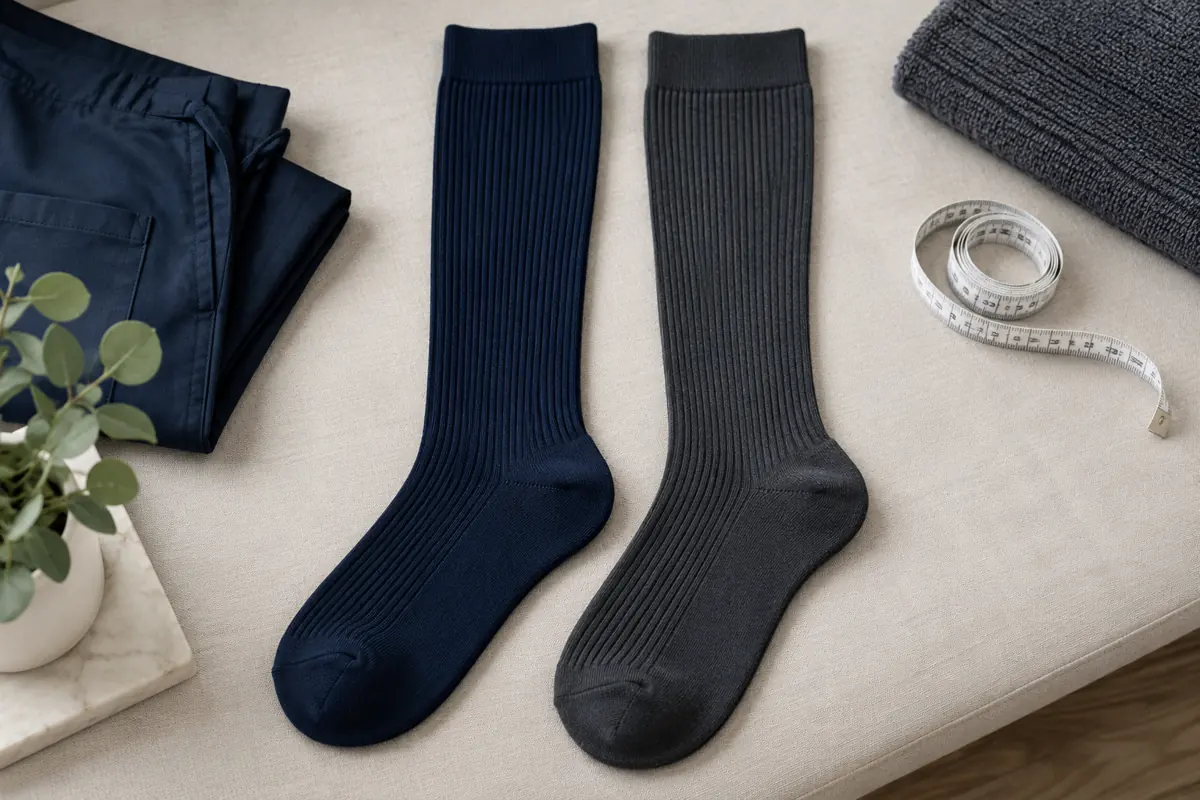
Navy and charcoal knee-high compression sock samples on a sampling table

Men’s & Women’s Scrub Socks

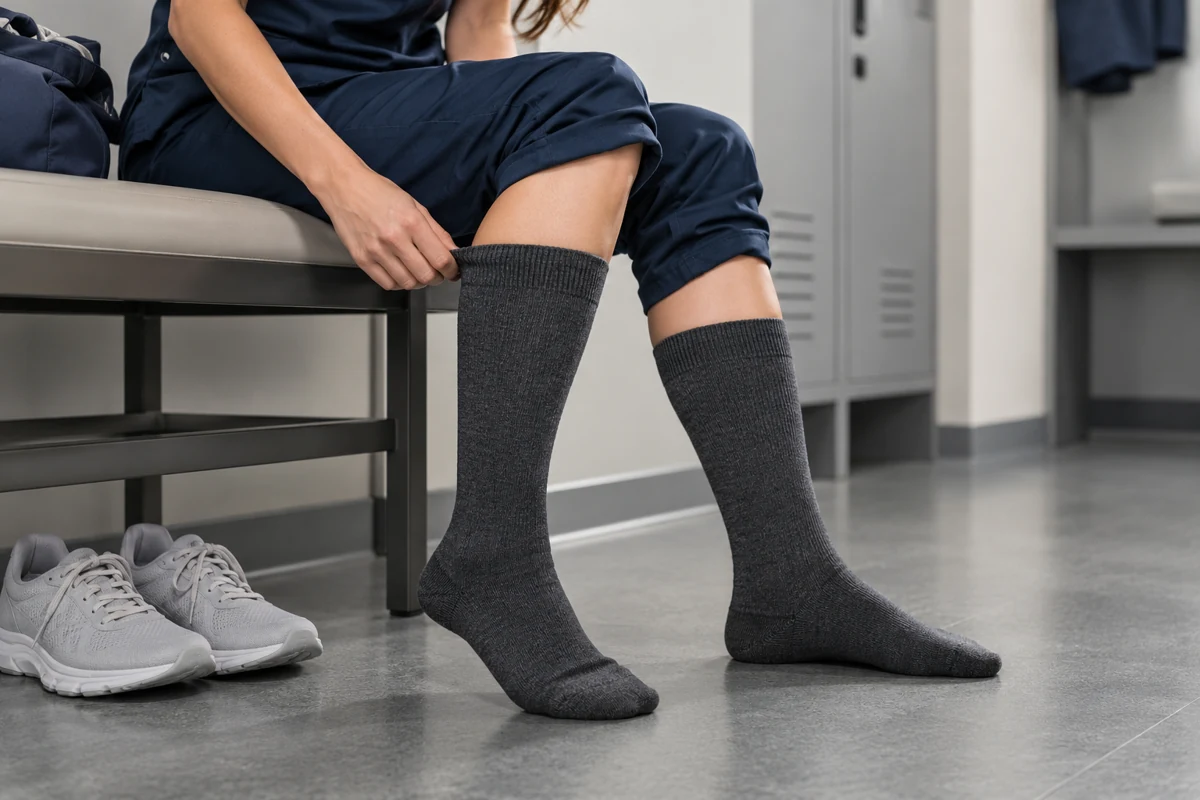
Woman wearing charcoal knee-high socks with navy medical scrubs

Women’s Scrub Socks

Calf bands graded independently of foot length, with wide and extra-wide calf blocks. Calf fit is the single biggest driver of returns in this category.
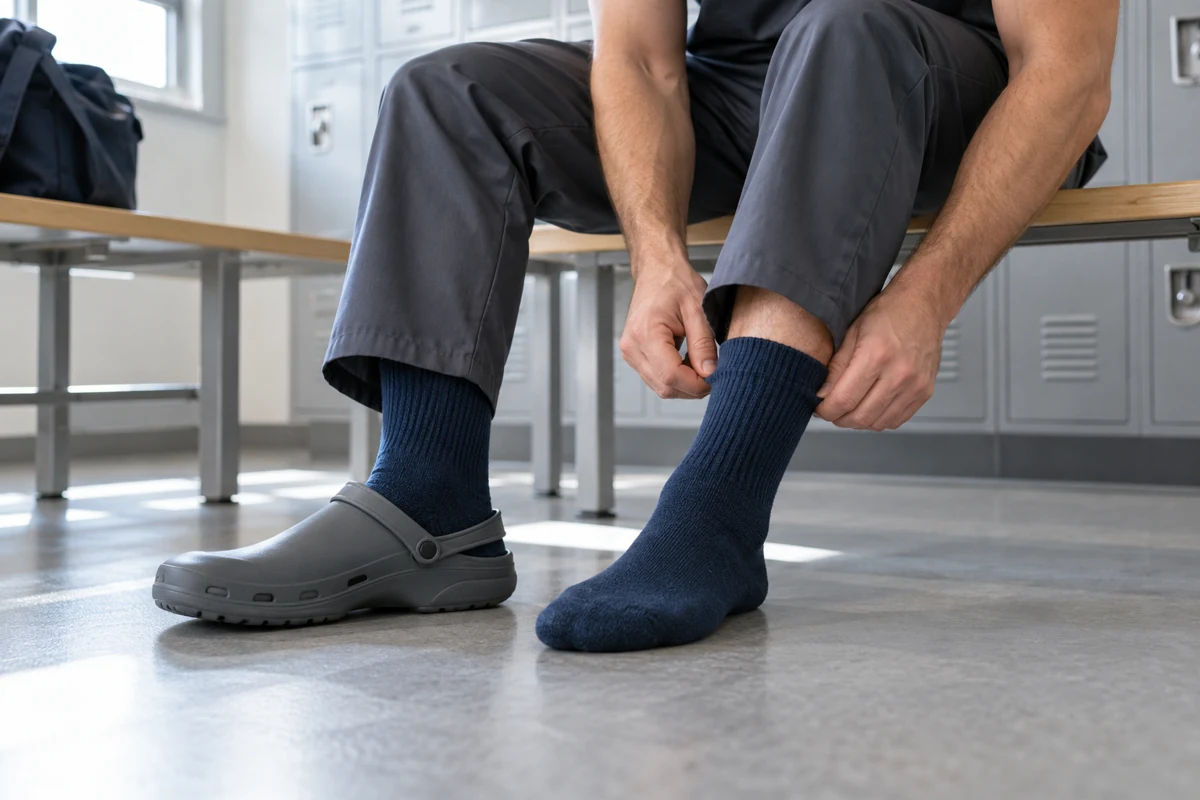
Man wearing navy crew socks with charcoal scrub trousers

Men’s Scrub Socks

Larger foot-to-calf ratios, a deeper cuff, and a size run that continues past men’s 13 without stretching the leg out of pressure specification.
Styles

Six builds across two families, graduated compression and everyday cushioned knit, all running on one yarn platform so a mixed order ships as a single colour story.

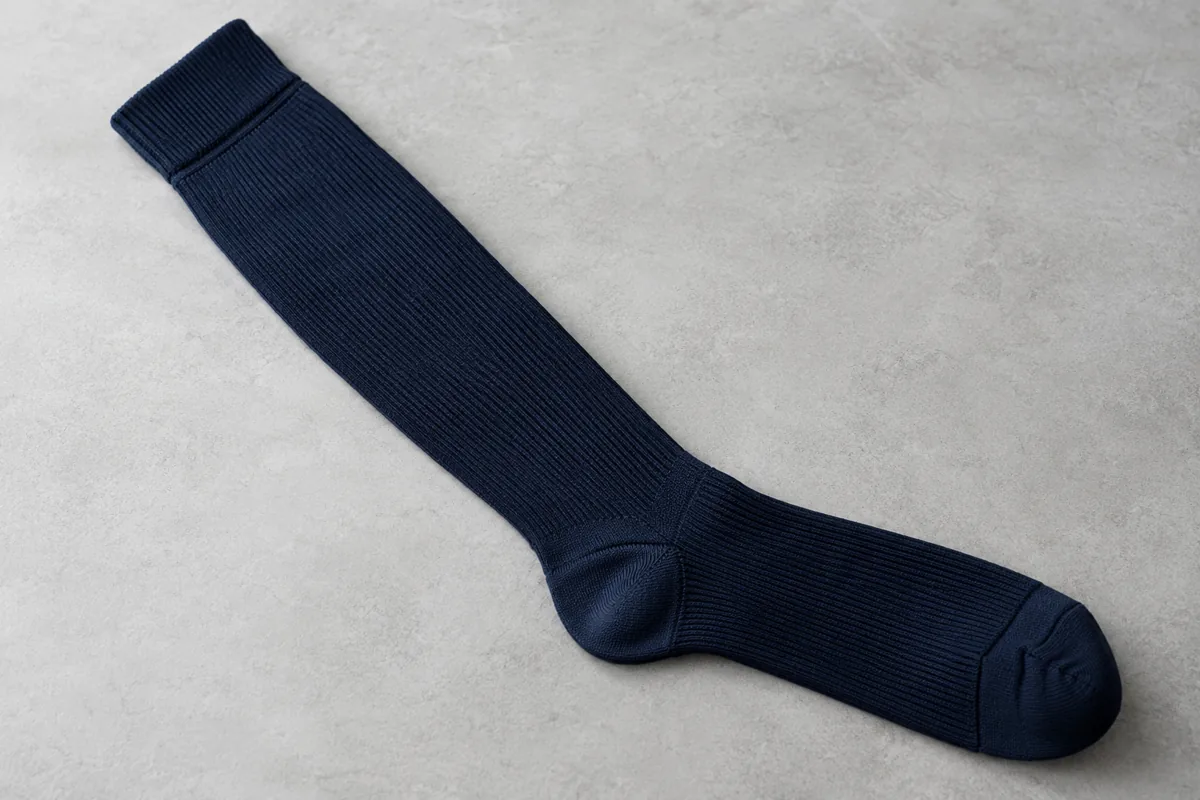
Navy knee-high scrub sock with a deep cuff and shaped heel

Graduated Knee-High

15–20 mmHg at the ankle, easing up the calf. The category default and the easiest first SKU.
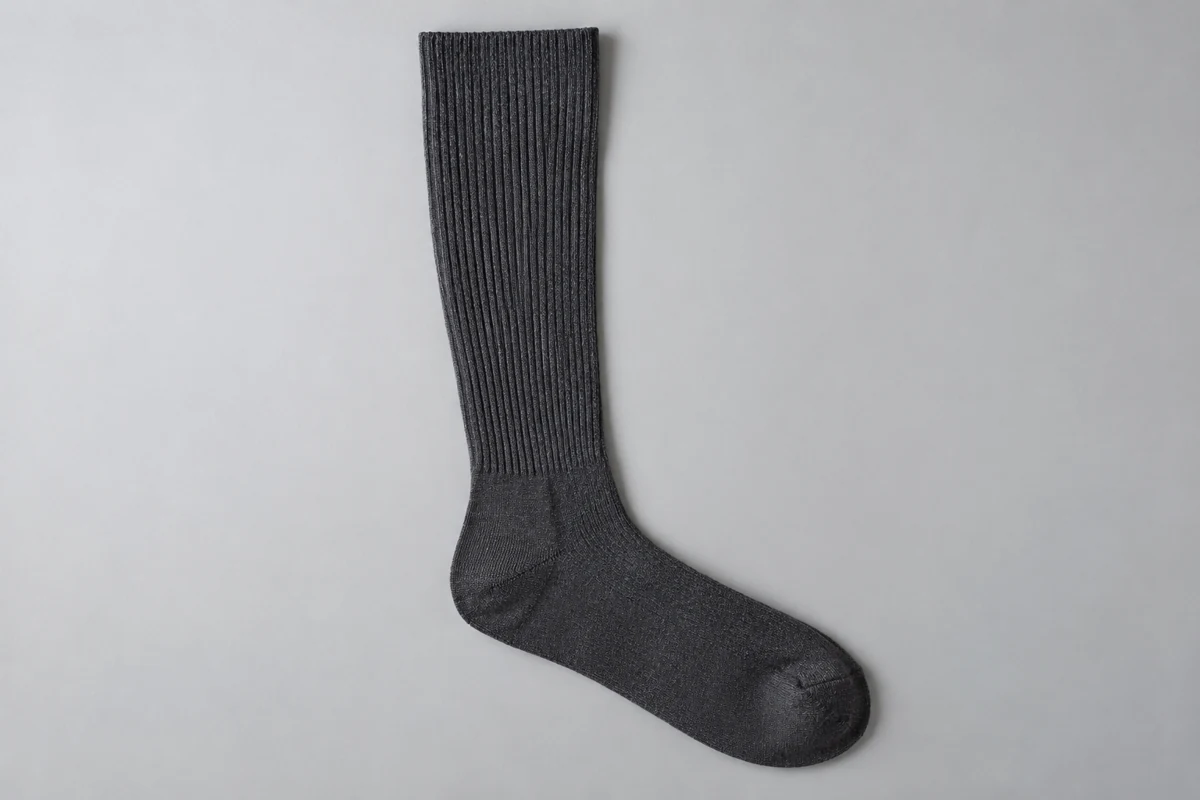
Charcoal knee-high sock sample with detailed calf knit

Progressive Profile

Higher pressure at the calf than the ankle. Easier to pull on, and better on occupational swelling.
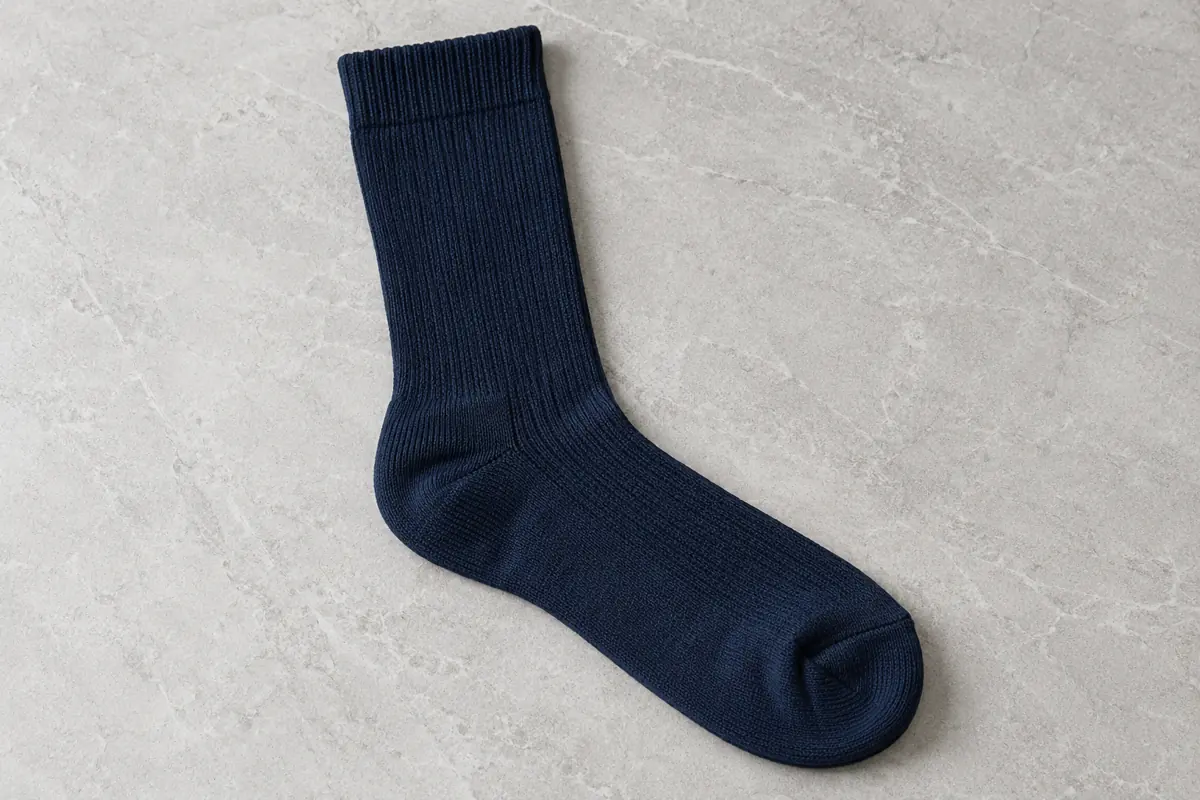
Navy crew-height scrub sock with ribbed cuff

Compression Crew

8–15 mmHg in a crew height, for staff who will never wear a knee-high.
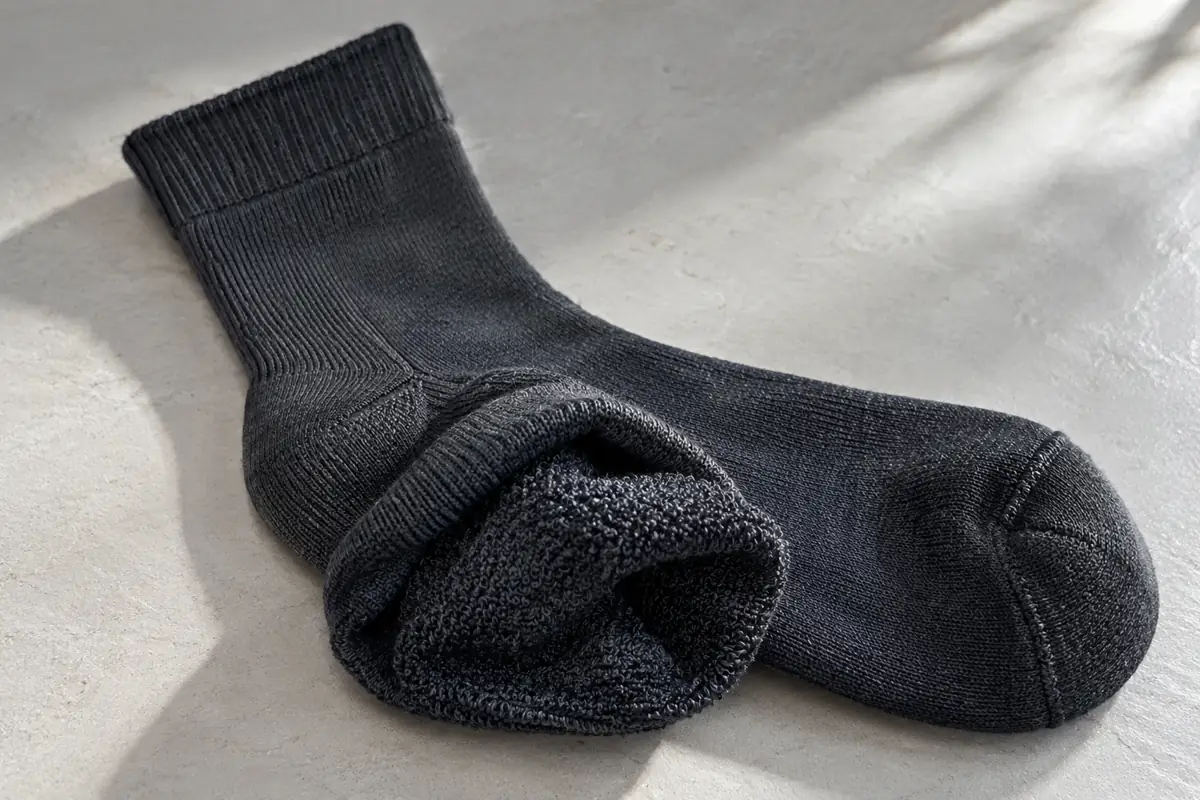
Charcoal crew sock showing cushioned terry loops at the sole

Cushioned Performance Crew

Terry sole, no compression. The everyday volume seller and the natural multipack.
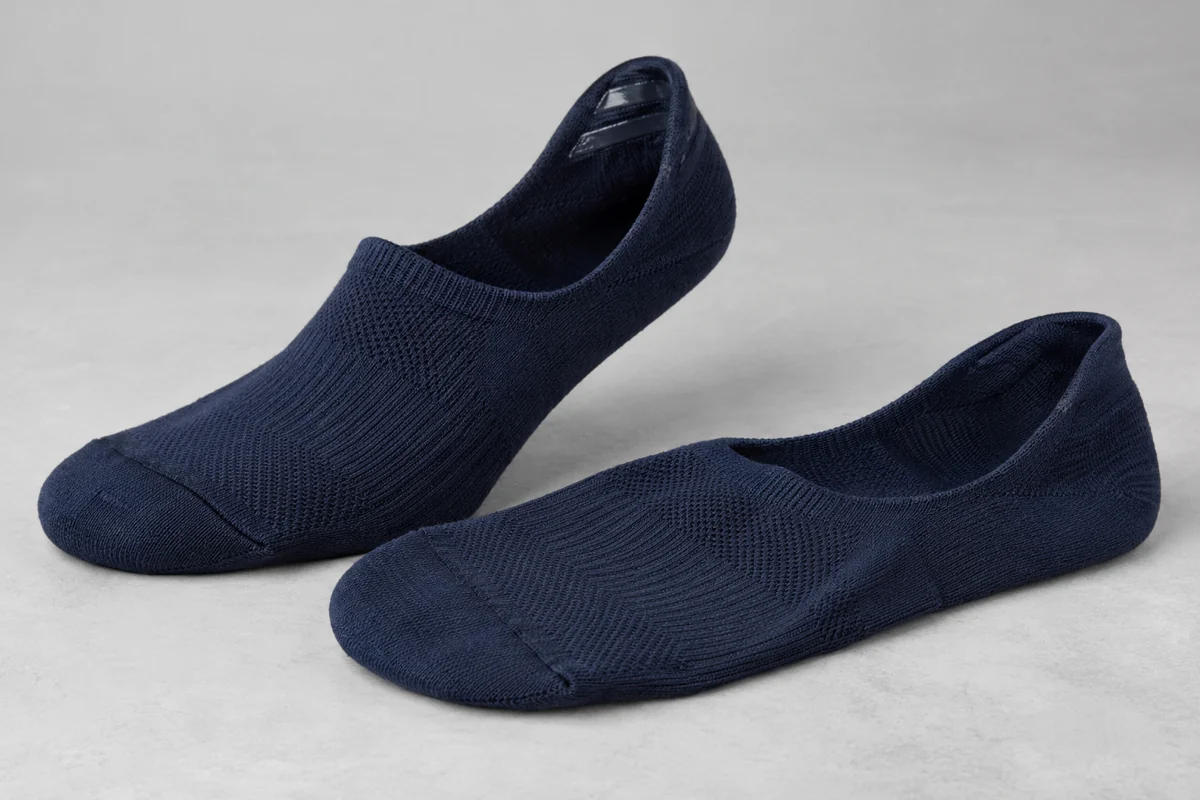
Navy no-show scrub socks with shaped heel openings

Low-Cut & No-Show

Warm-climate programmes and clog wearers, with a silicone heel tab so it stays put.
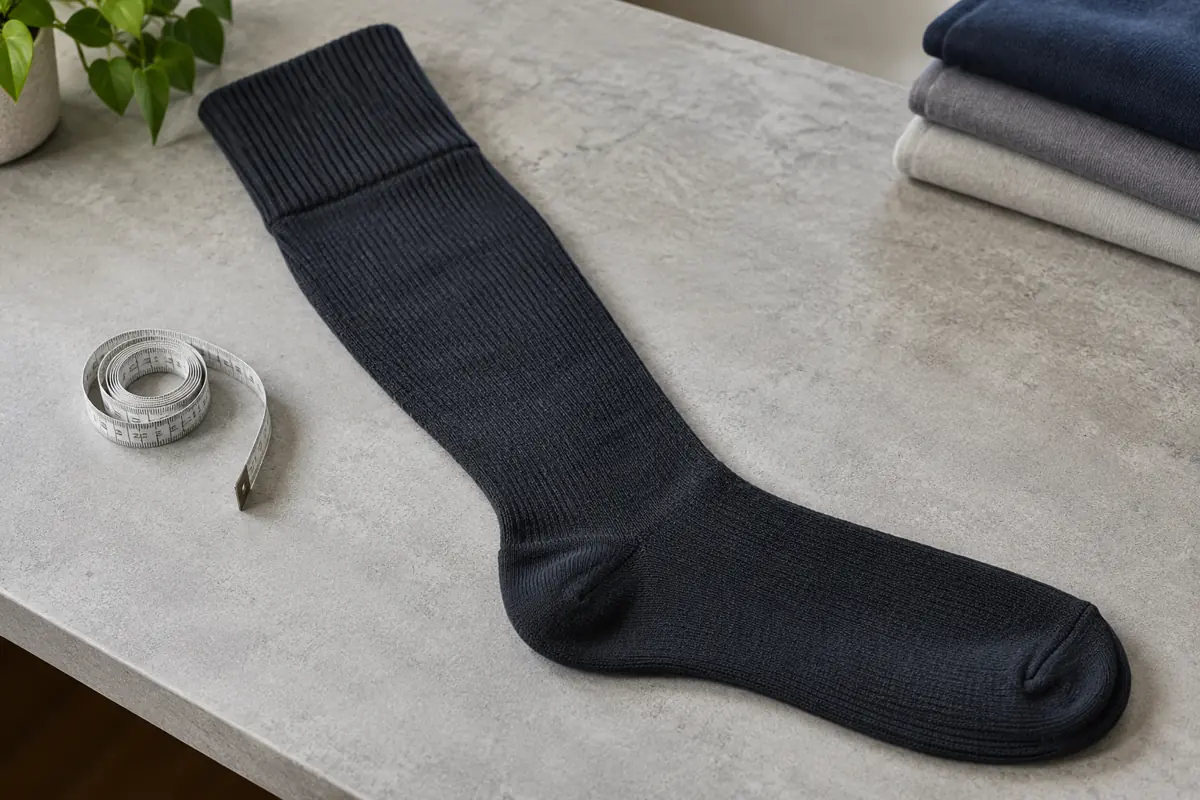
Wide-calf charcoal knee-high scrub sock sample

Over-the-Calf & Wide-Calf

Extended cuffs and blocks graded past 22 inches, instead of telling customers to size up.
Durability: Where the Compression Goes

Compression is elastane under load, and elastane relaxes. Across the category, manufacturers tell wearers to replace compression socks every three to six months, and to wash them after every wear precisely because washing helps the fibre recover. That is a commercial fact before it is a technical one: it is the reason this category reorders faster than anything else you sell. What it should not mean is a sock that is loose by week six. We specify elastane content and cuff tension separately from the leg, run wash-cycle retention checks against the sealed sample, and tell you plainly which constructions survive a tumble dryer and which do not. The same discipline we apply to garments going through commercial laundry.

Illustrative comparison of a neat sock cuff and a relaxed cuff

Yarn and Knit Platform

A sock is decided by four things: needle count, yarn, how the toe is closed, and how the elastane is laid in. Everything after that is colour.

Nylon–Elastane Compression Platform

The pressure-bearing construction, with elastane in-laid course by course rather than spot-inserted, so the gradient holds its shape through wear.

Combed Cotton and Poly-Cotton

The comfort end of the range. Long-staple combed yarn resists the pilling that fills sock review sections with one-star ratings.

Merino, Bamboo & Modal

Premium positioning, odour performance, and the hand-feel a customer notices the moment they open a 6-pack.

Moisture & Odour Finishes

Wicking structures, mesh venting and antimicrobial treatments for twelve-hour shifts inside closed clogs.

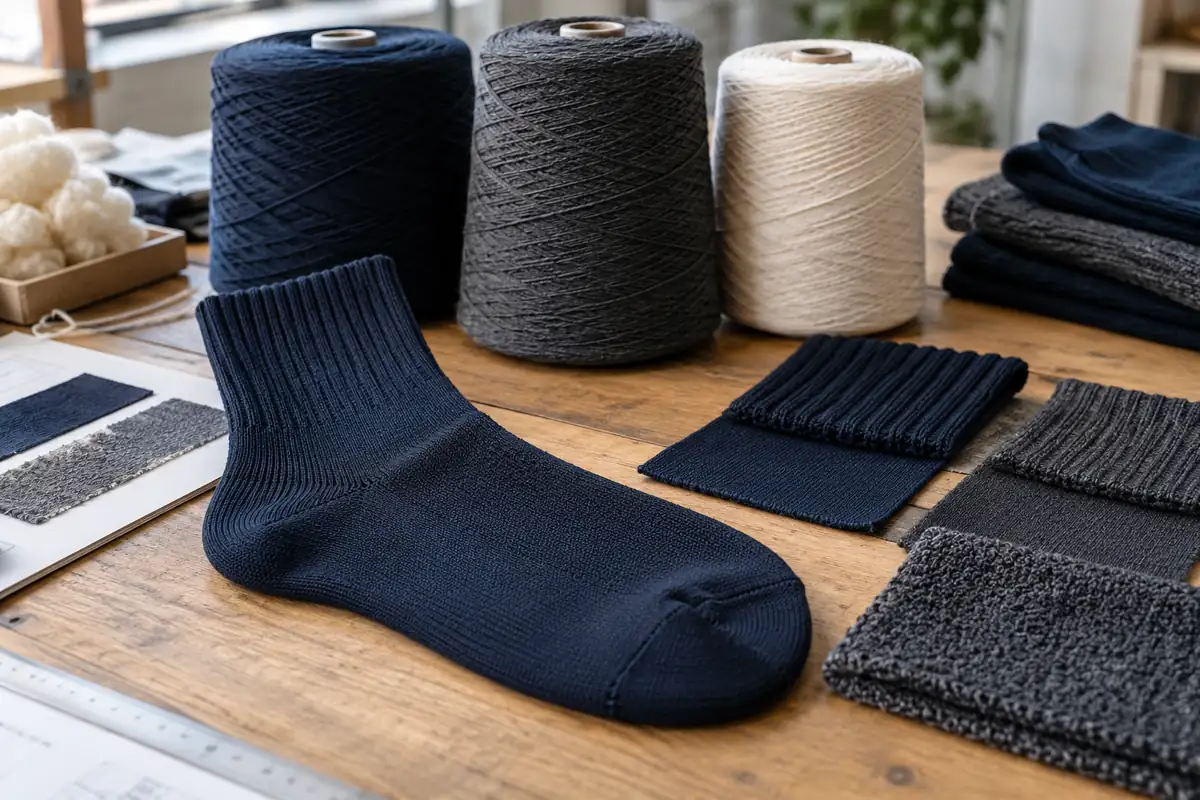
Yarn cones and smooth, ribbed and terry sock knit samples
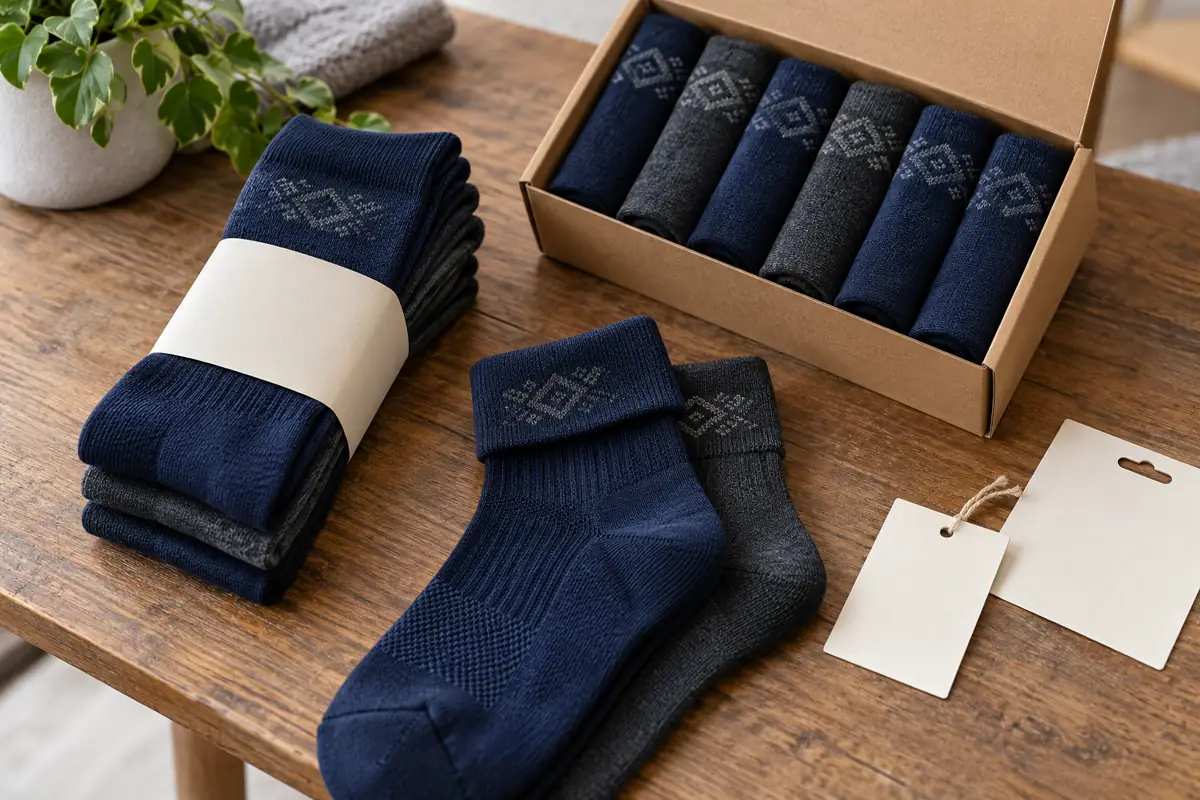
Scrub sock multipack samples with blank sleeves, hangtags and retail packaging

Private Label & OEM / ODM

Full white-label production: knit-in logos and jacquard brand marks, woven labels, printed cuff sizing and retail multipacks. Socks sell in 2-, 3- and 6-packs, which is why they lift average order value more reliably than any other accessory in a scrub range. Run them as a bundled SKU with your sets, or as a standalone line under our private label programme. The full build specification is set out in our scrub sock spec sheet.

OEM

We manufacture precisely to your tech pack. You design, we build.

ODM

We develop patterns, fits, and fabric selections with you from concept.

Your Claims Decide Your Paperwork

In the U.S., compression hosiery is addressed by 21 CFR 880.5780, which separates stockings for general medical purposes from those claiming to prevent pooling of blood in the legs, with different regulatory obligations attached to each. Comfort and leg-fatigue positioning is the lighter path. We write claim language with you before artwork goes to print; confirm final wording with your own regulatory advisor.

Pack Formats That Convert

2-, 3- and 6-packs, header cards, hanging hooks and shelf-ready cartons. Multipacks are the highest-converting format in socks and the cheapest way to raise order value on a scrub checkout.

MOQs, Production & QC

Production Process:

Consultation ->Sampling ->Pressure & Fit Approval ->Bulk Production -> Delivery
Quality Control:
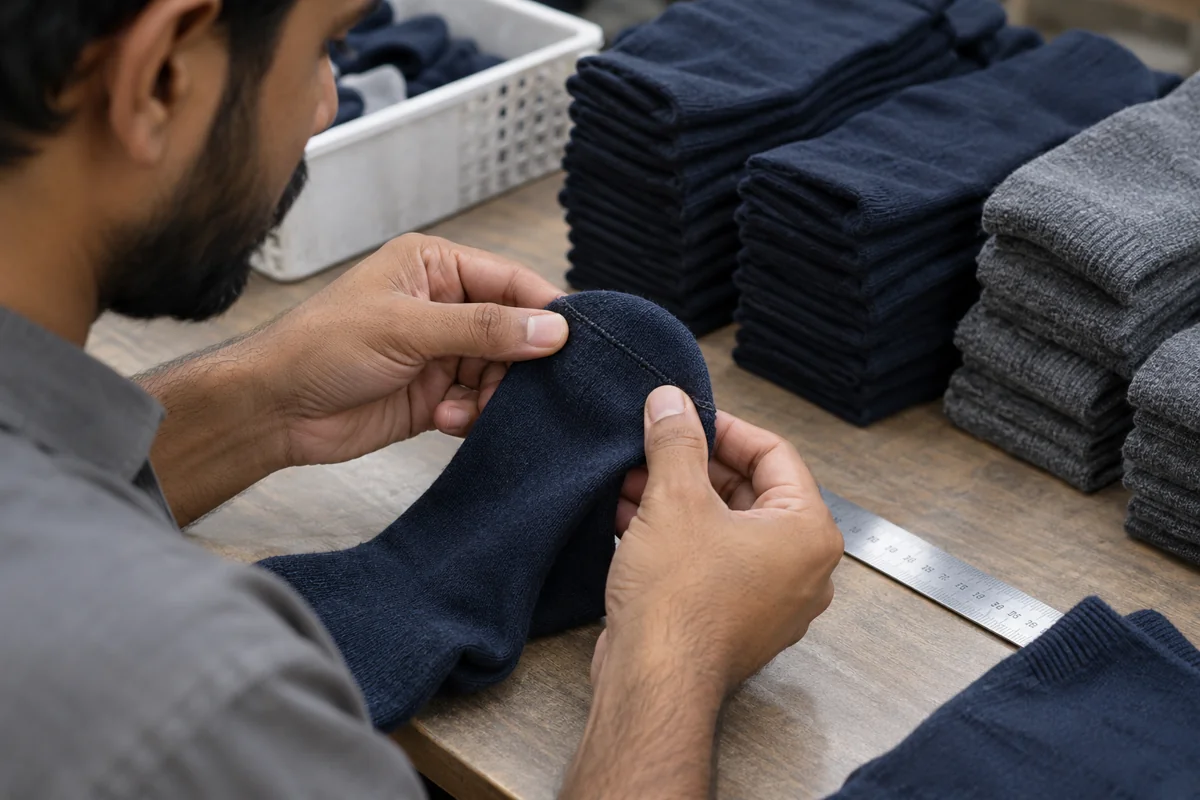
Textile quality inspector checking a navy scrub sock toe seam

Frequently Asked Questions

For everyday occupational wear, 15–20 mmHg is the usual commercial default. Research on working adults found that both 15–20 and 20–30 mmHg reduced end-of-day leg swelling, with a larger reduction at the higher pressure, while other work in the same field concluded 10–15 mmHg is already enough to prevent occupational swelling. Higher is not automatically better: the pressure people keep on for twelve hours is the one that helps them. Anything intended as medical treatment should be specified with a clinician.

Graduated socks are tightest at the ankle and ease up the leg. Progressive socks put the higher pressure at the calf. In a trial on healthy volunteers, the progressive profile was easier to put on, slightly more comfortable, and produced a significantly greater reduction in occupational swelling. We knit either. The choice should follow whether you are selling comfort on shift or symptom management.

Grade to calf circumference rather than shoe size, and specify the welt separately from the leg. A deep non-roll welt with its own elastane content holds position without a tourniquet effect. Wide and extra-wide calf blocks matter here: mis-sizing is common in compression hosiery, and a stocking in the wrong size does not deliver the pressure printed on the pack.

Three to six months of regular wear is the figure published across the category, sooner if a pair is worn daily without rotation. That replacement cycle is exactly why socks reorder faster than any other garment in a scrub range. We run wash-cycle retention checks so the decline is gradual and predictable rather than sudden.

It depends on what the packaging claims. Compression hosiery is addressed by 21 CFR 880.5780, which separates stockings for general medical purposes from those claiming to prevent pooling of blood in the legs, and attaches different obligations to each. Comfort and leg-fatigue positioning is the lighter path. Confirm final claim wording with your own regulatory advisor before artwork is printed.

Socks carry among the lowest minimums in our range. The number that usually constrains a launch is the per-colourway minimum rather than the per-style one, which is the figure most suppliers leave out of a quote. Tell us your colour range and pack format and we will quote both.

Yes. We dye to your approved colour standards so the socks read as part of the same system as your scrubs, and we knit logos directly into the cuff or leg, which outlasts any printed branding on a sock. Woven labels, hangtags and printed pressure classes are all standard options.

Crew heights sell in greater volume; knee-highs carry the compression story and the better margin. Most brands launch with one cushioned crew and one graduated knee-high, widen the colour range next, and only add further heights once the reorder data is in.