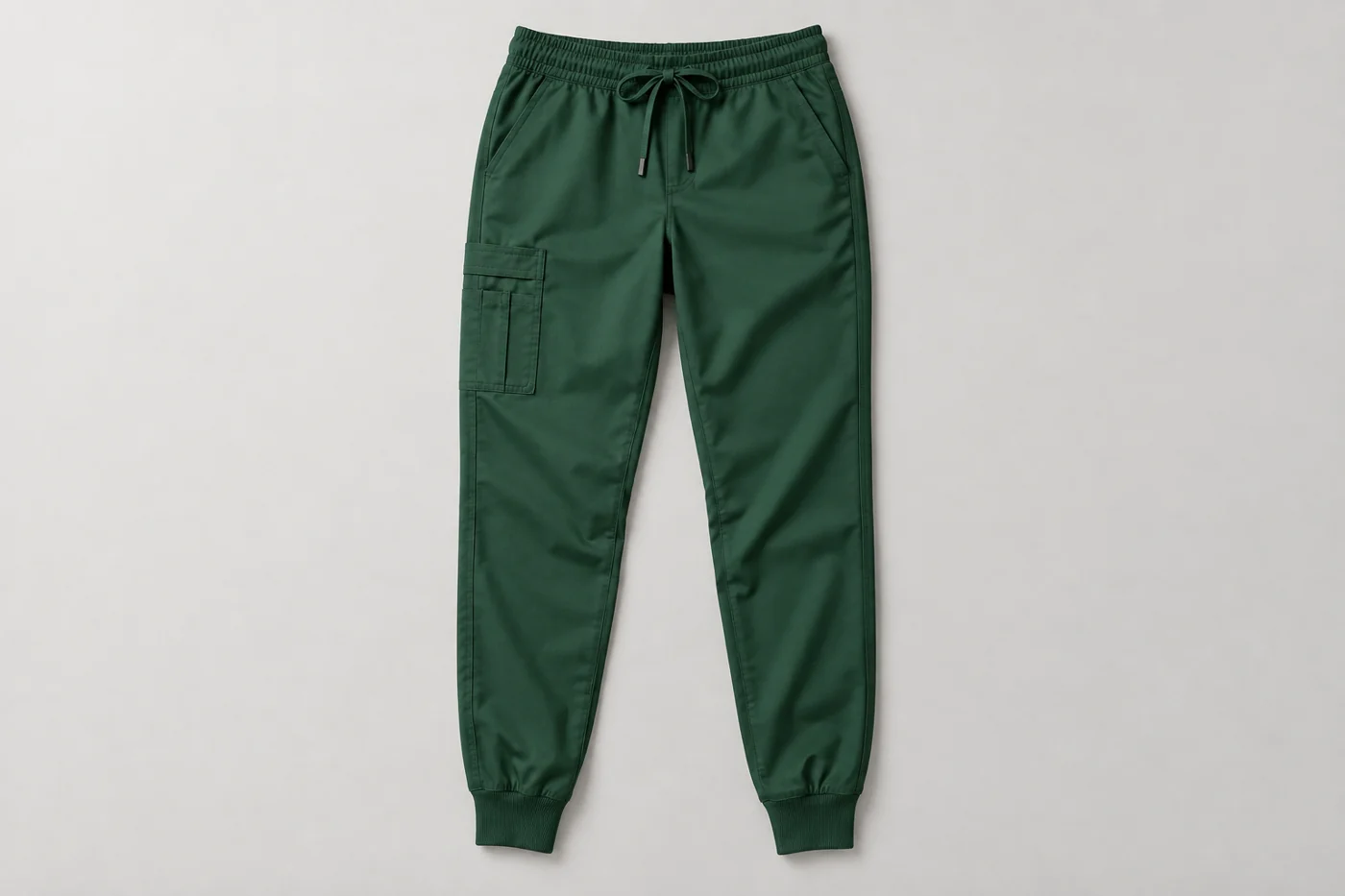
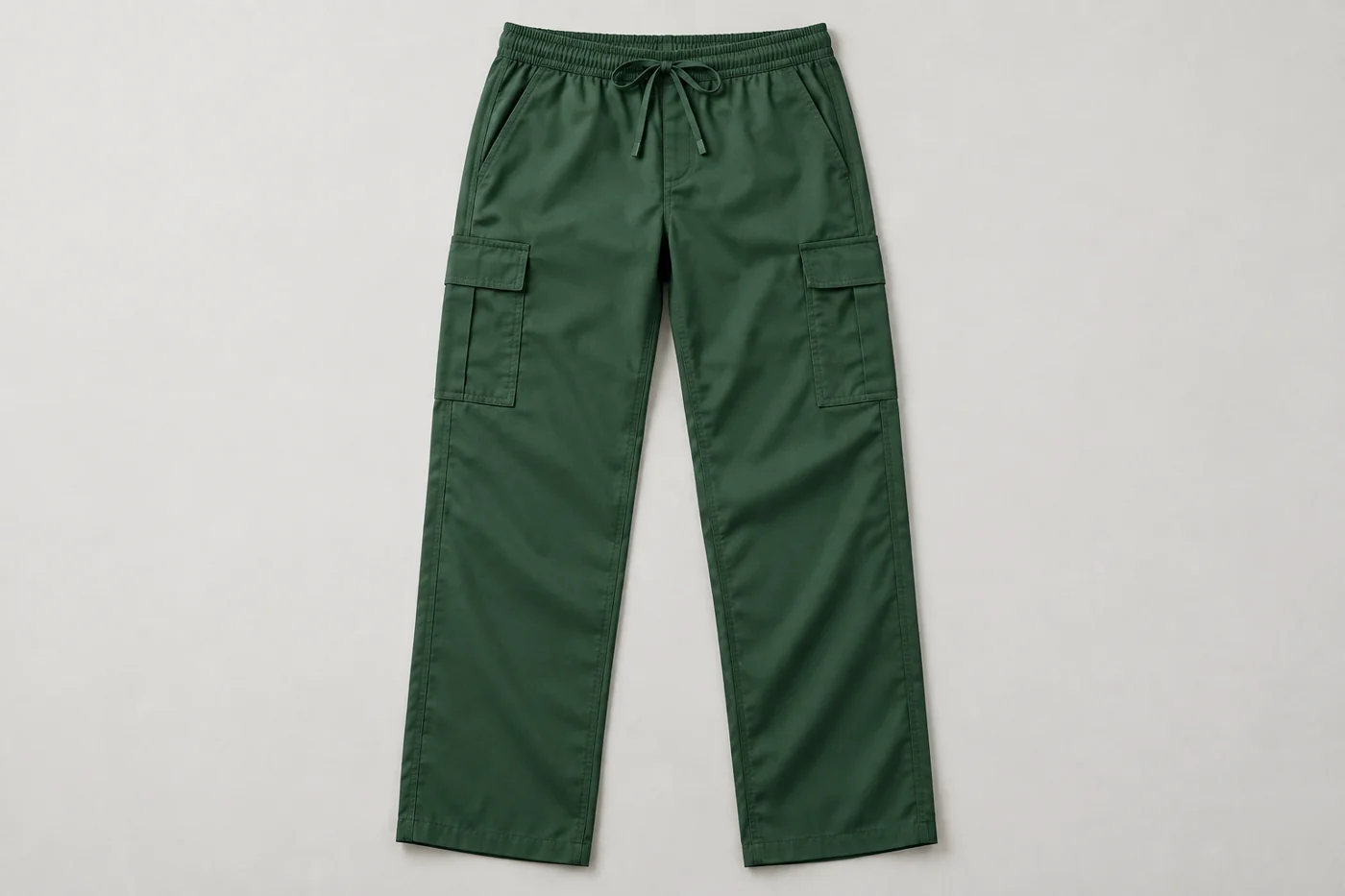
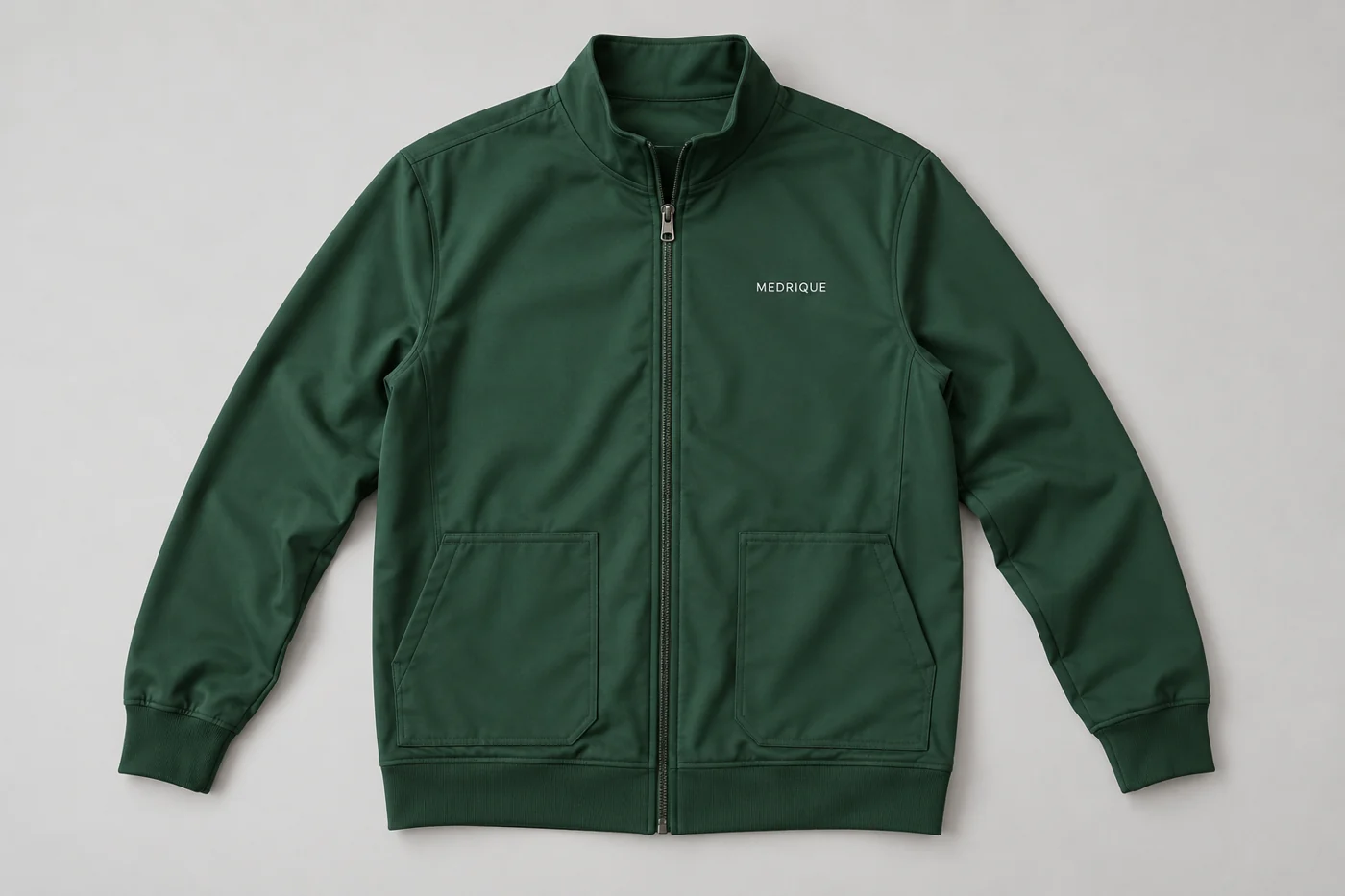
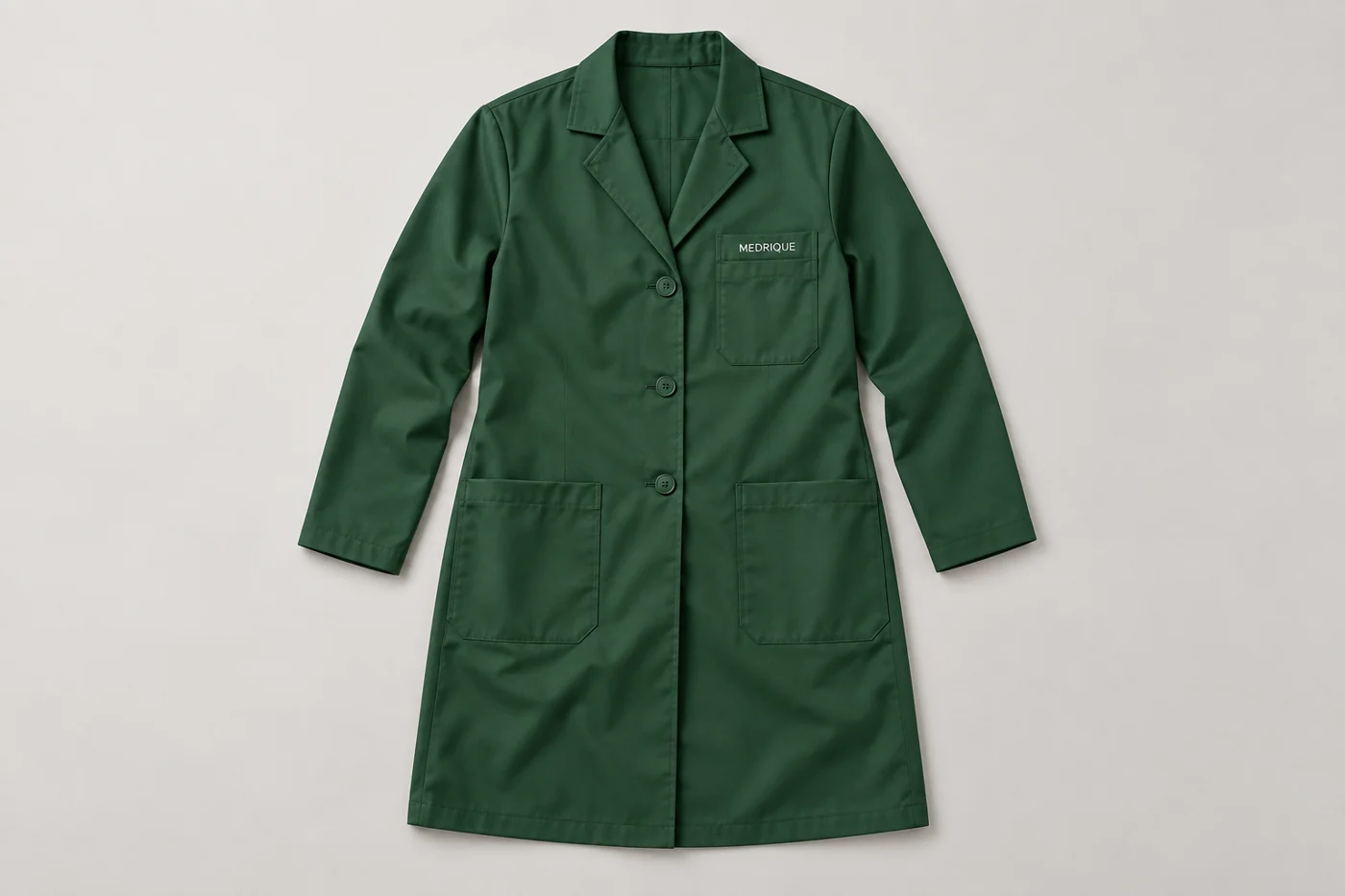
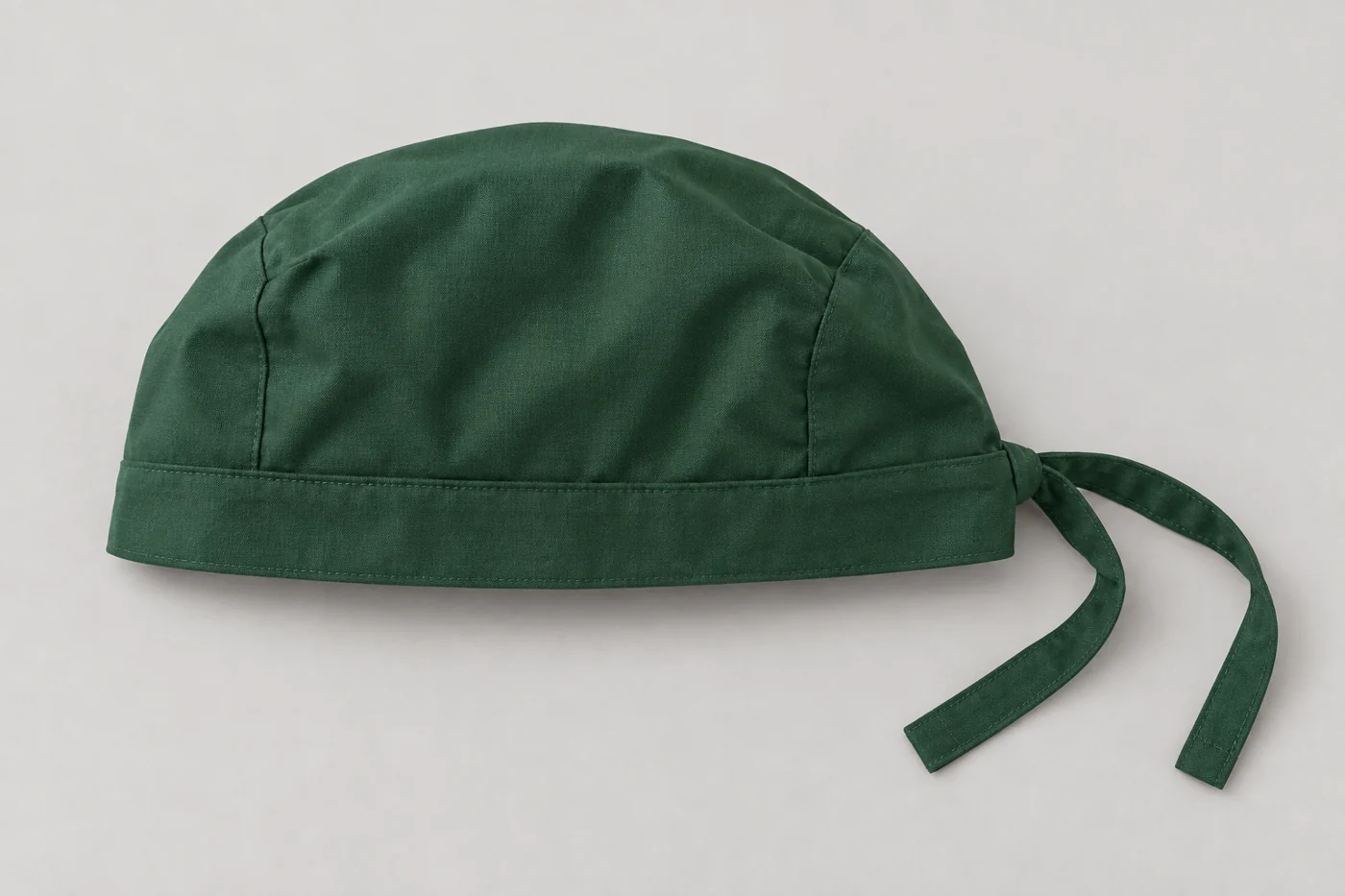
Shop by colour · Custom wholesale scrubs

Hunter green scrubs, manufactured to your exact shade

Hunter green is not a standardised colour. Ask six suppliers for it and you get six different greens. We manufacture custom hunter green scrubs for US hospitals, surgical units, veterinary practices, dental groups and nursing programmes — matched to a Pantone reference or to a garment your team already wears, from 30 units per style.

100 units minimum per style 1 business day to an itemised quote XS–5XL graded, petite and tall Sealed sample retained for reorders
Healthcare team wearing hunter green Medrique scrubs
Home › Custom Wholesale Medical Scrubs › Hunter Green Scrubs
Lab dip approved by youNothing is cut until you sign off a physical dip
Single dye lotTops and pants cut together so they match
Quote in 1 business dayItemised, with a production timeline
30 units per styleReal low MOQ, not a catalogue minimum
US delivery, DDP availableExport documentation handled our side
The green shade library

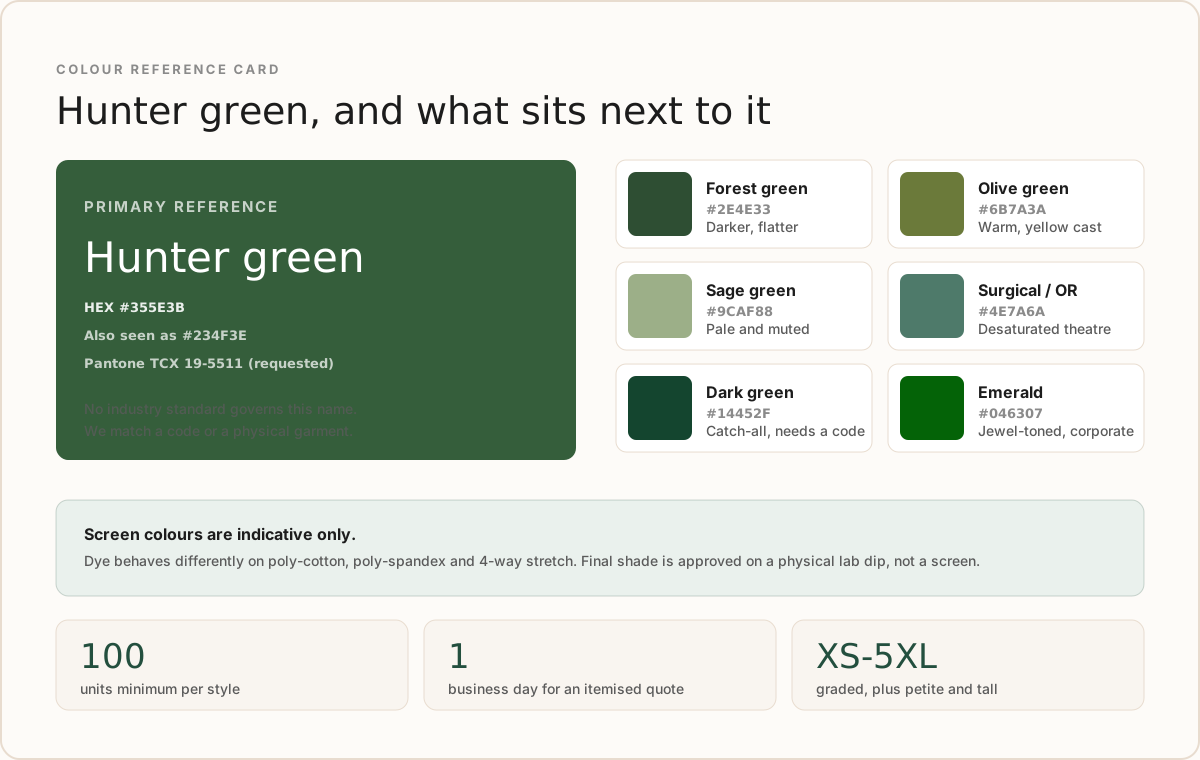
Every green a buyer asks for, on one card

Green scrubs are the shade suppliers agree on least often. Hunter, forest, olive, sage and surgical green are used interchangeably across catalogues, and the same name can arrive two shades apart from two factories. Use this as a starting vocabulary, then send us the code or the garment that actually governs your programme.

Match my green
Hunter greenThe deep, blue-leaning classic. No agreed definition between suppliers, which is why we match it to a physical reference.
Olive greenWarm and yellow-cast. Popular with private clinics and veterinary teams who want green without the theatre association.
Forest greenDarker and slightly flatter than hunter. Commonly mandated by nursing programmes and college uniform codes.
Sage greenSoft, muted and currently the most requested light green for aesthetic and dental practices.
Surgical / OR greenThe desaturated theatre shade chosen to sit opposite red and reduce visual afterimage.
Dark greenA catch-all buyers use for anything below hunter. Always needs a code or a garment to pin down.
Emerald greenSaturated and jewel-toned. Reads corporate rather than clinical under ward lighting.
Kelly greenBright, blue-free green. High visibility, unforgiving on fade if the dye is not specified properly.
Teal greenSits between green and blue. Frequently confused with hunter in low-CRI light.
Jade greenCooler and lighter than hunter, with a grey-green base that photographs well.
Army greenOlive drab family. Requested for EMS and tactical-adjacent medical kit.
Seafoam greenPale, cool and cosmetic-leaning. Shows soiling faster than any deep green.
Misty / hospital greenThe pale institutional green used widely in circulating ward stock.
Mint greenLight and clean. Best in poly-cotton, where the finish keeps it from reading washed-out.
Moss greenEarthy mid-green with a brown cast. Close cousin to olive and often mislabelled as it.
Lime greenVery high chroma. Almost always a branding or department-coding decision, not a clinical one.
Light greenRequested for paediatrics and maternity units where softer colour is preferred.
Caribbean greenBright blue-green. Sits in the same family as teal and reads fresher on stretch knits.
Apple greenYellow-dominant bright green, rarely specified for whole-facility programmes.
Sea greenMid-depth green with a blue base. A frequent substitute when hunter is unavailable off the shelf.
Midnight greenVery deep green-teal. Excellent for branding contrast, difficult to match across two fabrics.
Bright / neon greenVisibility-driven. Needs a controlled dye recipe or it shifts badly on the first commercial wash.
Blue-greenThe overlap zone. If your dress code says green and your stock looks blue, the shade lives here.

These hex values are approximations for orientation, not standards. Screens are not calibrated, no standards body separates hunter from forest, and a hex cannot describe how a dye behaves on a 65/35 poly-cotton twill versus a four-way stretch knit. We manufacture in every shade above; we just never manufacture from a colour name alone.

Send us your Pantone code or garment
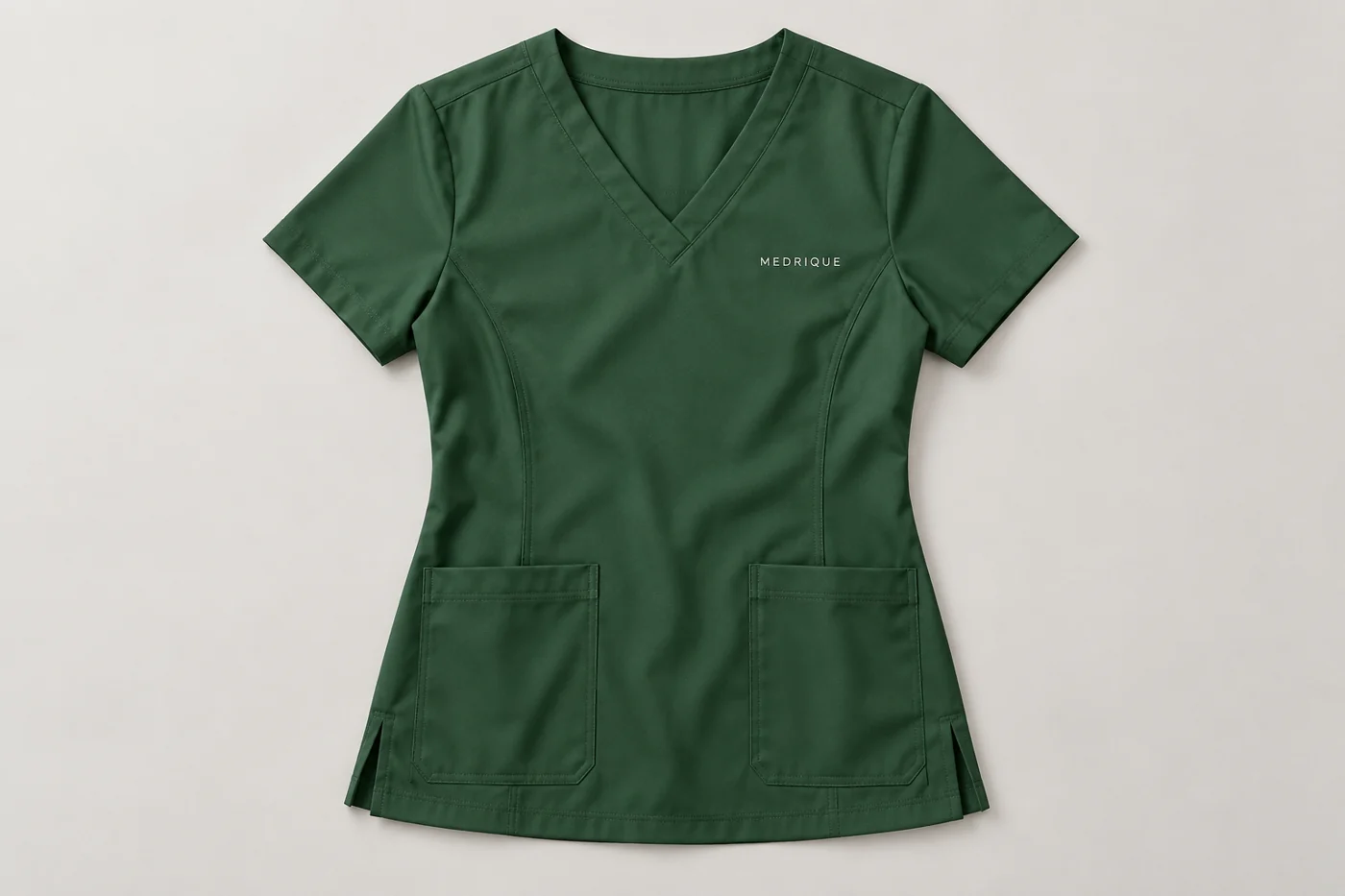
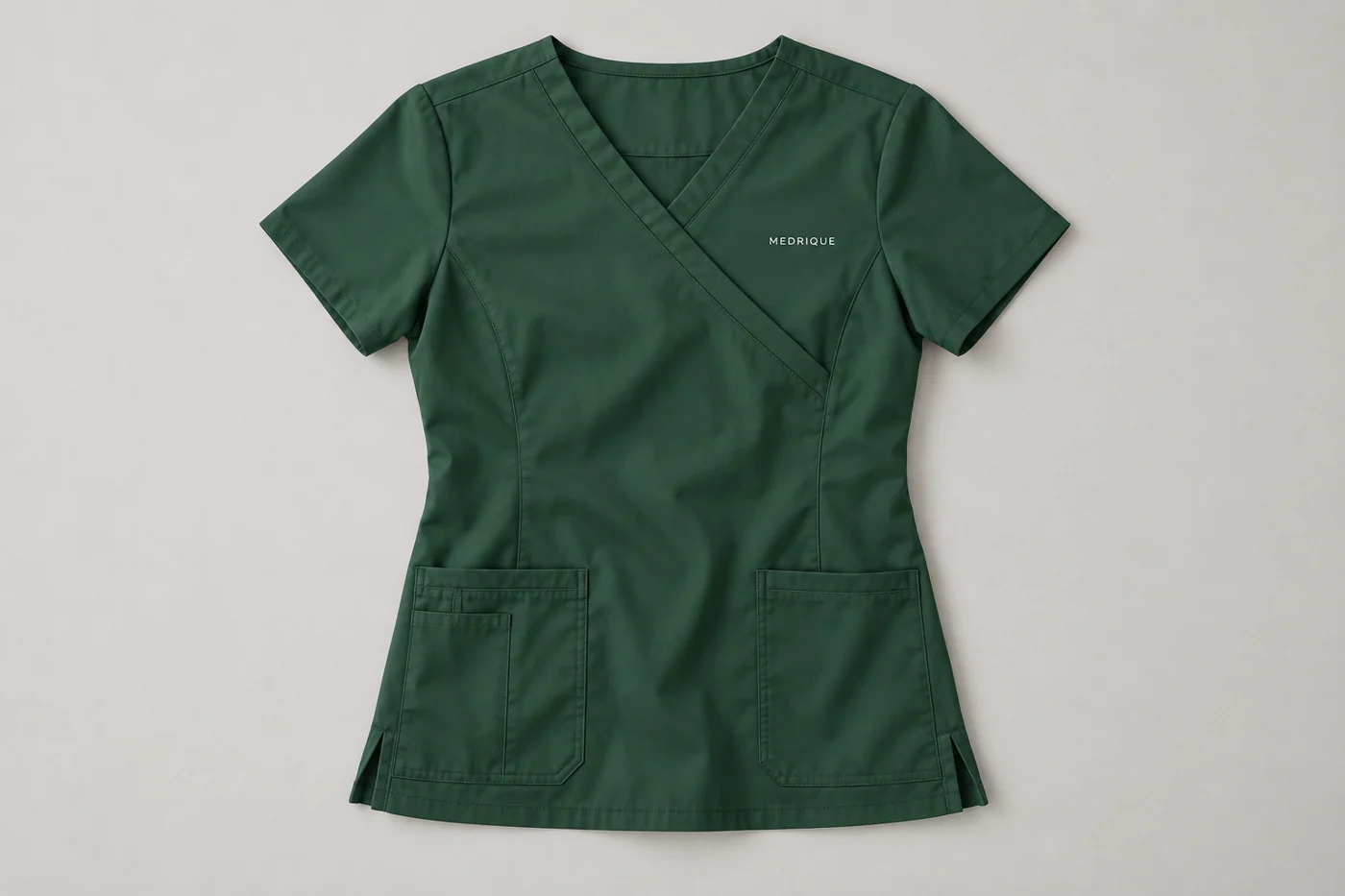
Women’s hunter green V-neck scrub top
Matched to a physical referenceA signed-off lab dip becomes the retained standard for every reorder
The problem with the name

Why two hunter greens rarely match

Hunter green carries no standard behind it. It sits somewhere between a deep forest and a muted bottle green, and exactly where it sits depends on whose shade card you happen to be reading. Buyers discover this at the worst possible moment: when the second delivery arrives and does not match the first.

Green is also the colour most affected by the light it is seen under. Fluorescent and LED fixtures with a low colour rendering index push green towards grey or towards yellow depending on the tube, so a shade signed off under daylight can read differently on the ward. Two garments that match perfectly under one light source can visibly separate under another — metamerism, and the most common reason a green uniform programme is rejected after it was already approved.

  • Green is rarely one dye. It is a blue component and a yellow one, and they do not always exhaust or fade at the same rate.
  • A fading navy still looks navy. A fading green can look bluish in one lot and yellowish in the next.
  • The same recipe reads differently on poly-cotton than on a four-way stretch knit, so multi-fabric orders are matched to each other as well as to your reference.
  • Worn garments tell us what your laundry does to the shade, which a colour name never can.
Send a garment and we will match to it
Two ways to buy hunter green

Off the shelf, or held to your own standard

Retail stock is the faster route for one or two sets. It stops working the moment the colour has to stay identical across a department, across sizes and across reorders. This is the honest comparison.

What you are decidingOff-the-shelf retail stockManufactured to your standard
Shade consistencyVaries by brand, batch and production run. Two «hunter green» tops can sit visibly apart.Matched to a Pantone reference or a garment you already wear, approved on a lab dip.
Reorders six months laterRe-matched by eye against whatever is in stock that season.Cut against a sealed sample retained from your first approval.
Top and pant matchingOften different lots, so the set reads as two greens under ward lighting.Cut from one dye lot so the set reads as one uniform.
Size rangeLimited by what the brand carries; specialty sizes drop out first.Graded XS to 5XL, with petite and tall blocks.
Logo and brandingAdded afterwards by a third party, thread colour approximate.Embroidered in production in a matched thread.
Fabric choiceWhatever the style ships in.Poly-cotton, poly-spandex, 4-way stretch or cotton, specified per order.
If the line is discontinuedThe colour disappears and the programme restarts.Your standard is held on file; the colour does not depend on a catalogue.
MinimumSingle units.30 units per style.
Colour control

How we pin your green down before you commit

Four steps between your enquiry and a bulk run you can accept on sight. Nothing here is optional and nothing here is charged as an extra.

Sampling and lead times
1

Start from something physical

A Pantone TCX chip, or better, a garment your team already wears. Send one new piece and one well-worn piece: the new one gives us the target, the worn one tells us what your laundry is doing to it.

2

Lab dip under more than one light

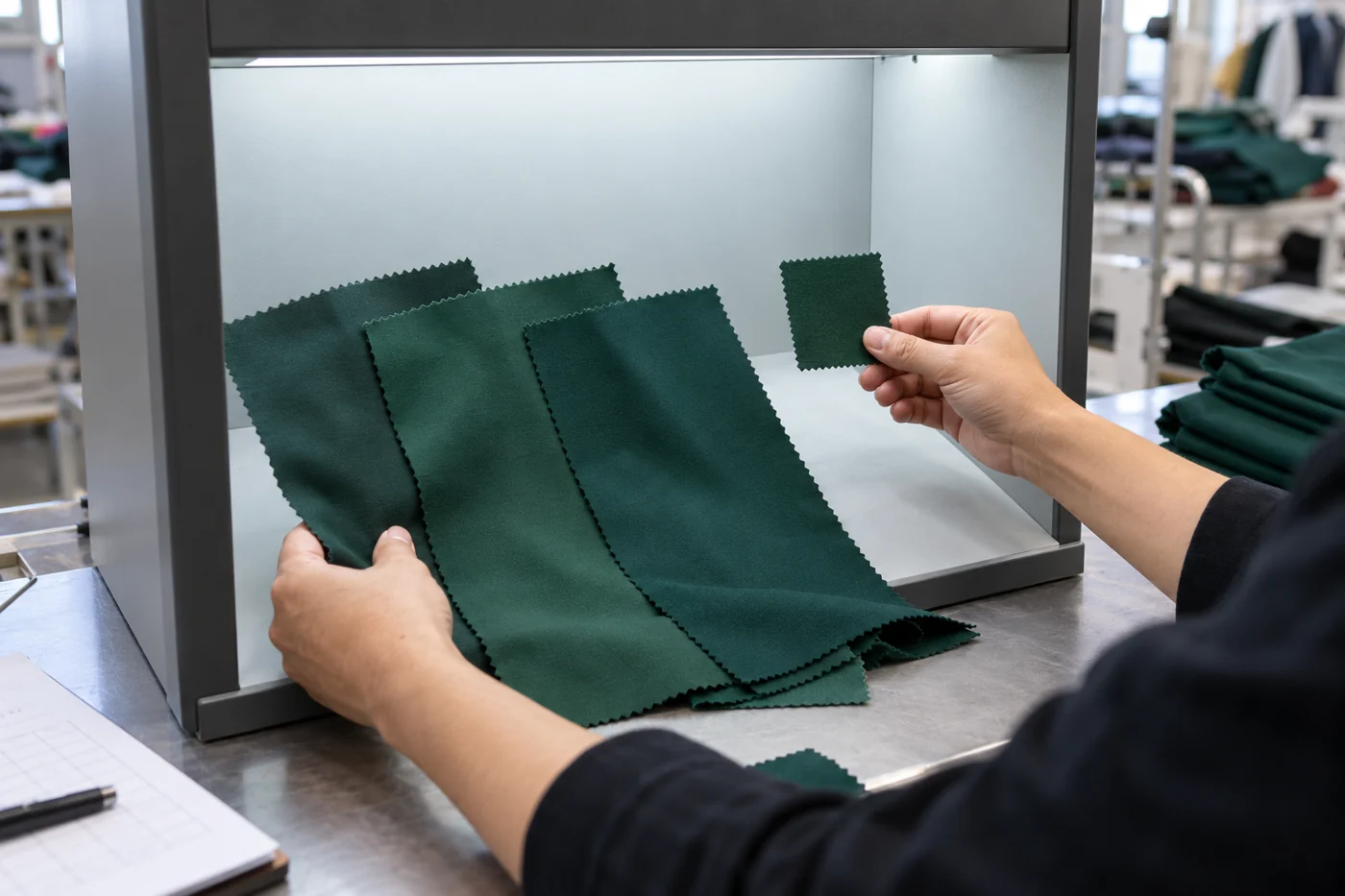
Dips are assessed in a light box under a daylight source and a ward-type fluorescent, specifically to catch metamerism before bulk rather than after it.

3

You approve, we seal it

Your approved dip becomes a sealed physical sample retained here. Every future bulk is judged against that piece, not against a screen, a photo or a memory of the first order.

4

Cut from one dye lot

Tops and bottoms are cut from a single lot wherever quantity allows, and fabric is held from the original lot when a rollout is staged across months.

Hunter green colour reference card showing hex values alongside forest, olive, sage, surgical and emerald green
Physical references, not screenshotsSwatch cards and the approved garment are kept together as the reference every future bulk is judged against.
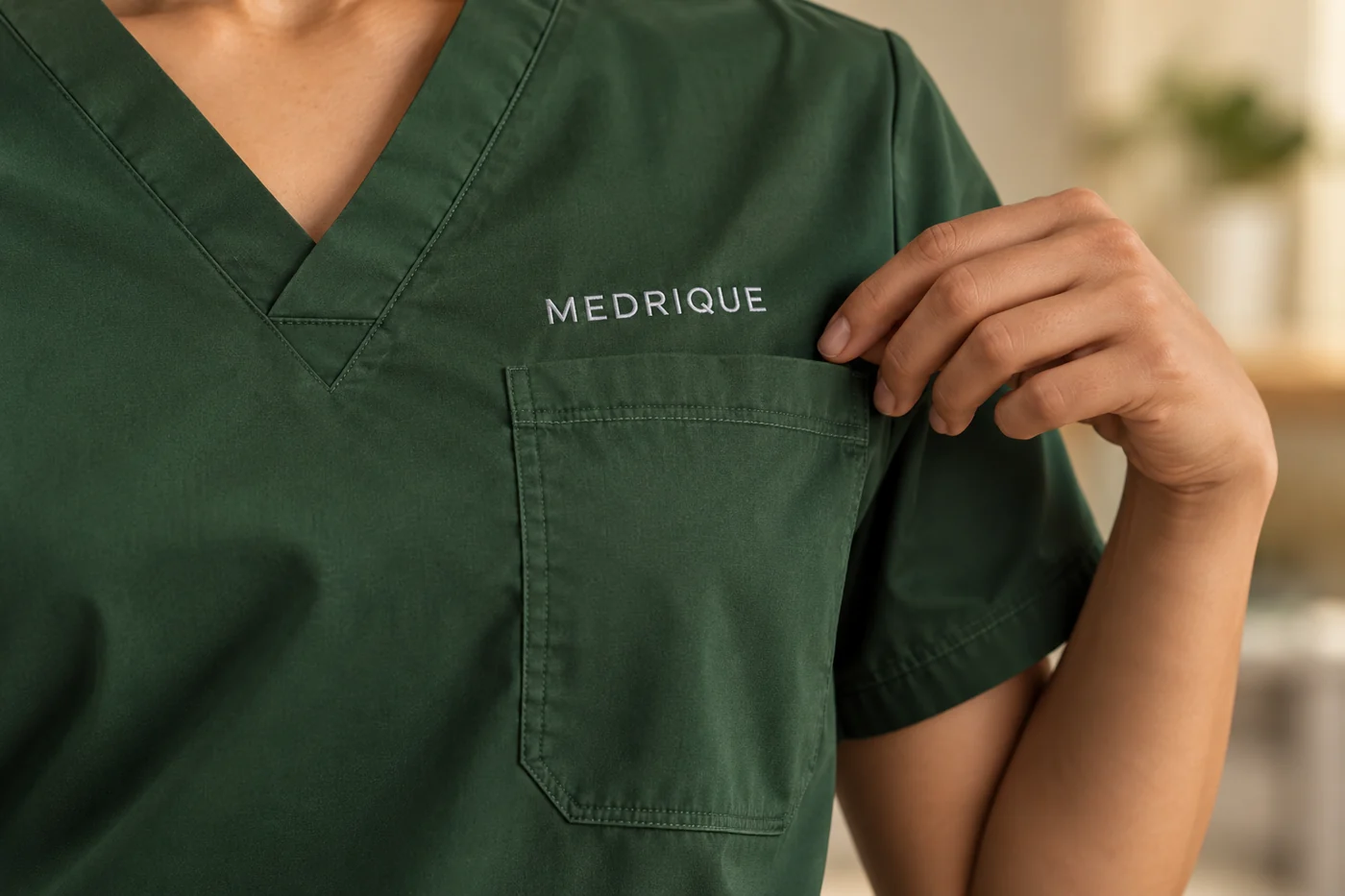
Medrique embroidery stitched on hunter green scrub fabric
Branding matched to the shadeLight and tonal embroidery both read well on hunter green; thread is matched at the same stage as the fabric.
Hunter green fabric swatches being compared to a physical colour reference
Packed to your site splitOne dye lot, cartoned and labelled per location, so what arrives at each site is the same green.

If the quantity genuinely cannot come from one dye lot, we tell you before you order and quote the tolerance we will hold — so variation is a decision you made, not a surprise you received.

Start a lab dip
Before you commit to a run

See the green on fabric, not on a screen

No monitor shows you how a dye sits on poly-cotton versus 4-way stretch, or how it shifts under ward fluorescents. Every colour decision here starts with something physical in your hand.

What you get before any bulk order

  • Hunter green on your chosen fabric — the same dye behaves differently on each base cloth, so it is dipped on the cloth you will actually run.
  • Checked under more than one light — daylight and ward lighting, because greens shift more than most shades between the two.
  • Your approval sealed and retained — that sealed sample becomes the standard every future reorder is cut against.
  • An itemised quote in 1 business day — split into fabric, make, trims and branding, so you can see which line to push on.

Send us the green you have to match

A Pantone TCX code, a photo of a garment already in use, or the name of the brand you are replacing. Any of the three is enough to start.

Start a colour matchMessage us on WhatsApp
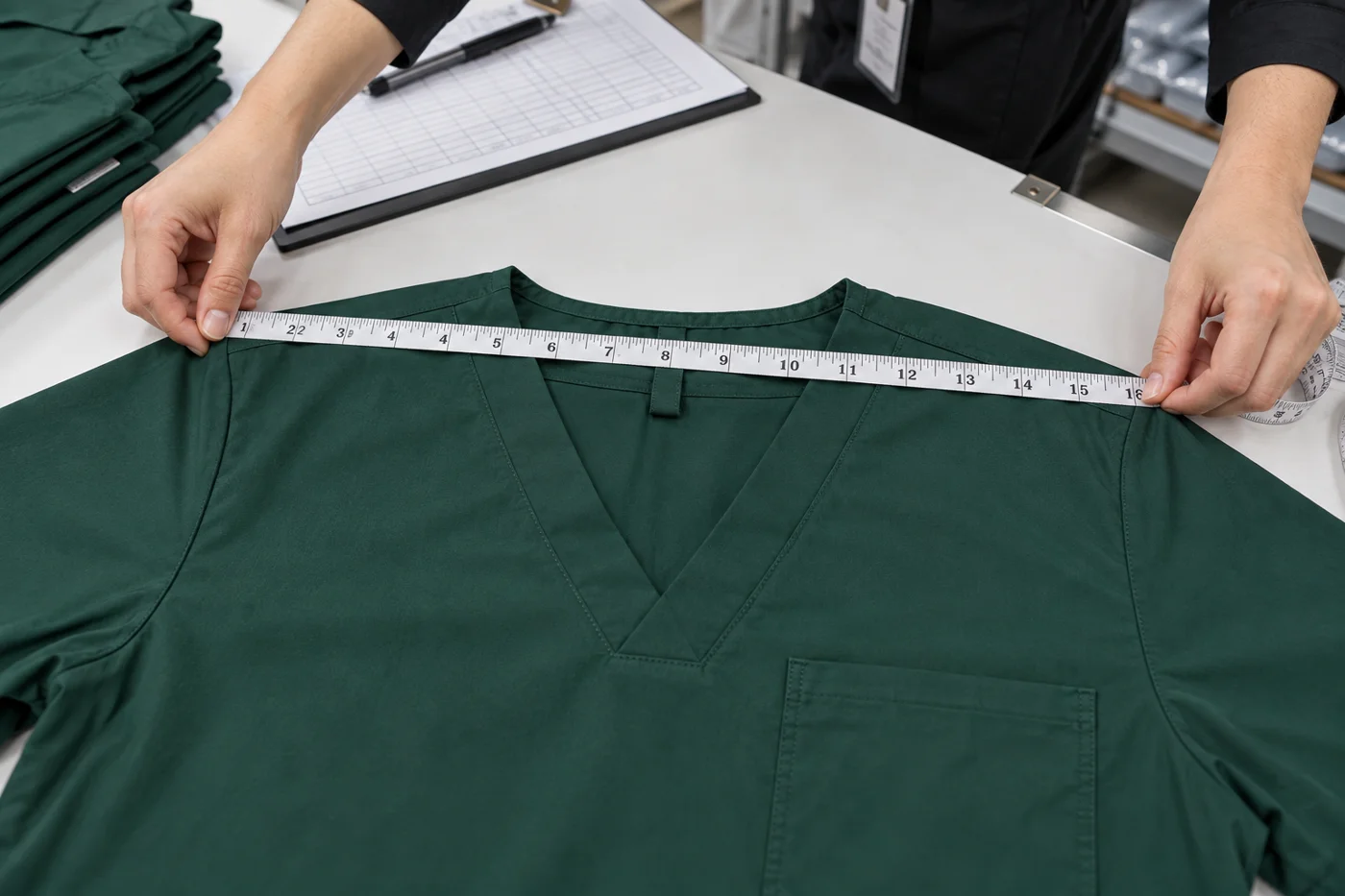
Technician measuring the shoulder seam of a hunter green scrub top
Wash fastness tested on the finished garmentNot on the fabric alone, because seams, thread and finish all move the result
Fade, wash and hue shift

Does hunter green fade? It shifts before it lightens

This is the single most common question buyers ask about green scrubs, and the honest answer is that green fades less visibly than black and more than navy — but the way it fails is different. Because the shade is built from a blue dye component and a yellow one, a small drift in either moves the hue, not just the depth. That is why a green can go bluish in one lot and yellowish in the next while a navy from the same dye house stays put.

Fabric and finish choice matter more than the dye alone. Tell us the wash regime you actually run — home laundry, in-house industrial, or a third-party commercial laundry at high temperature with a chlorine-based sanitiser — and we will tell you which construction holds the colour best for it.

Compare fabrics for high-wash programmes
Cause

Two dyes, one colour

Blue and yellow components rarely exhaust onto the fibre at exactly the same rate. Control that ratio and the hue holds; ignore it and the green drifts within a season.

Control

Finished-garment testing

We test wash fastness on the made-up construction, so thread, trims and finish are in the test rather than discovered later on the ward.

Insurance

Held fabric for staged rollouts

Where a programme is delivered across months, fabric is held from the original lot so month six still matches month one.

Relative colour-holding of common scrub shades, high-temperature commercial laundry

NavyBest
Hunter greenGood
Olive greenGood
Sage greenFair
BlackFair

Indicative ranking from production experience, not a substitute for a test report. Fastness results for your specific fabric, shade and wash regime are quoted with your sample.

THE CLIENT EXPERIENCE

Reviews from our community

Sample content: fictional names, portraits and reviews for layout preview. Replace these examples with genuine customer feedback.

SAMPLE REVIEW
“The sample process made it easy to compare fit, fabric and shade before planning a team order.”

Fictional sample portrait of Sarah Mitchell
Sarah MitchellFictional customer example

SAMPLE REVIEW
“A coordinated uniform makes a difference. The pocket layouts and colour options are exactly the details our team would look for.”
Fictional sample portrait of Michael Brooks
Michael BrooksFictional customer example
SAMPLE REVIEW
“Clear communication, useful size guidance and thoughtful branding would make a team rollout feel much easier.”
Fictional sample portrait of Emily Carter
Emily CarterFictional customer example
Questions buyers actually ask

Hunter green scrubs: the questions that come up

Most of these come straight from what clinical staff complain about to the people who order their uniforms. If your question is not here, ask it on the quote form and we will answer it before you commit to anything.

What colour are hunter green scrubs?

Hunter green is a deep, blue-leaning green sitting between forest green and a muted bottle green. Buyers most often send us #355E3B or a deeper #234F3E, and Pantone TCX 19-5511 comes up regularly. None of those is an industry standard, which is the whole problem with this shade: two suppliers can both call their fabric hunter green and land two visible steps apart. We manufacture from a Pantone reference or a physical garment, never from the name.

What is the difference between hunter green, forest green and olive?

No standards body separates them. In practice hunter green is deep and blue-leaning, forest green is darker and slightly flatter, and olive carries a yellow-brown cast that reads warm rather than clinical. Sage is the pale, muted green in the same family. Because the names are unreliable, we work from a code or a garment and keep the approved dip on file.

Our last batch of hunter green did not match the one before it. How do you stop that?

This is the single most common complaint we hear, and it is a dye-lot problem rather than a supplier problem. When a reorder is re-matched by eye against whatever fabric is current, it drifts. We seal your approved lab dip and cut every future order against that retained standard, and we cut tops and pants for one programme from a single lot so the set reads as one uniform on the floor.

Staff say the green fades after a few months of hot washes. Does a custom run change that?

It changes what you can specify. Green is a shade that shifts before it lightens, because a poly-cotton blend takes two dye classes and the polyester and cotton sides age at different rates. Balanced correctly, it holds; balanced badly, it drifts warm. We specify the dye system against your actual wash conditions, so tell us at quote stage if the garments go through industrial laundry rather than domestic machines.

Do you really grade for plus and petite, or just scale one block up?

Graded blocks, not a scaled base size. Nurses are vocal about this: a plus-size garment that is simply a large made bigger gaps at the waist when the hips fit, and petite cuts pinch across the chest. We grade XS to 5XL with separate petite and tall blocks, and the grading rules are confirmed on your approved sample before bulk.
Can we change the pocket layout? Our staff say there are not enough.

Yes, and it is worth doing. Pocket count and depth are the most frequent complaint about hospital-issue scrubs, usually because phones slide out of shallow side pockets across a twelve-hour shift. We specify pocket count, depth and placement per block rather than inheriting whatever the base pattern came with. Tell us what staff actually carry and we build to it.

The tops we have now go see-through under ward lighting. How do we avoid that?

Opacity is a function of fabric weight and construction, not colour, though it shows up worse on lighter shades. Hunter green is more forgiving than most, but a thin cloth will still read through under bright clinical light. We confirm opacity on the physical sample under the lighting you actually work in, which is part of why nothing goes to bulk off a screen.

Staff find polyester scrubs hot by the end of a shift. What should we specify?

That is usually a high-polyester performance cloth with no moisture path. If comfort over long shifts is the priority, a poly-cotton blend or cotton breathes better than a heavy poly-spandex. If stretch and recovery matter more, 4-way stretch is the trade-off. We quote more than one so you can compare on a real garment.

Our sites each mandate a slightly different green. Can you hold more than one?

Yes. Each approved shade gets its own sealed sample and its own reference on file, so a system running three greens across three sites does not end up with them converging or drifting into each other. Send the codes or garments for each and we quote them as separate colourways on the same blocks.

What is the minimum order for custom hunter green scrubs?

30 units per style. Colours, sizes and blocks can be split within that, and you get an itemised quote within 1 business day broken into fabric, make, trims and branding so you can see which line to push on. Full detail on MOQs, sampling and lead times.

Next step

Match your hunter green exactly

Send a Pantone code or a garment. We lab-dip it, you approve the dip, and that becomes the standard we hold for every future order. No obligation, and nothing to commit to in order to ask.

One named contact. A reply within one business day. From 30 units to 10,000, manufactured for healthcare teams across the United States.

What to send with your enquiry
  • Your Pantone TCX code, or a new and a worn garment
  • Garments and quantities per style and size
  • Fabric preference, or the wash regime you run
  • Your facility colour code, if you have one
  • Branding: embroidery, woven label or print
Start the quote